Review Summary: A reminder of where the bar should be set for old guard thrash comebacks
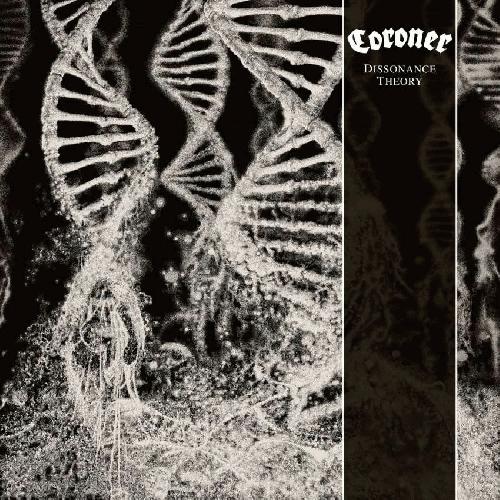
Of all the thrash bands to come back after half a lifetime away, Coroner’s first proper album in thirty-two years is among the most enticing. Perhaps that’s due to this particular comeback having been teased for about a decade in itself but Coroner has always been the sort of band who seemed like they could’ve adapted. You can certainly hear the years through Dissonance Theory’s downtuned guitars and gruffer vocals, but such factors reflect more experience than shortcuts. The extra atmosphere also works in the premise’s favor, giving weight to the comparisons that some have made to Celtic Frost’s Monotheist.
Having said that, there are still enough core traits for Coroner to remain recognizable. The sound is inevitably closest to 1993’s Grin with a similar focus on grooves and syncopated rhythms, but the overall aggression and speedy segments are rooted in what have 1991’s Mental Vortex so much of its character. This sort of technical finesse has always been key to their identity regardless of the context present and it’s especially nice to see that precision be applied without coming off plastic.
The songwriting also reflects that involved mindset, toeing a line of intricate catchiness that is readily bolstered by the atmosphere. The gradual escalations on tracks like “Sacrificial Lamb” are powerful enough to turn their brooding thrusts downright apocalyptic while “Crisium Bound” isn’t afraid to let its thrash charge meander at the halfway mark. On the flip side, there’s something to be said for the more straightforward bashing of “Symmetry” and “Renewal” or the battle-hardy trot on “Trinity.” I also appreciate the quirky little details that give the songs some extra character like the vocoder tinges on “Consequence” and the tuning change that becomes part of the riff itself on “Transparent Eye.”
With so many old guard thrash bands releasing new albums in recent years to mixed results, Dissonant Theory is a powerful reminder of where the bar should be set. The band has modernized itself splendidly while maintaining their core personality, always offering intricate compositions and tight musicianship for whatever mood is at hand. There’s enough here to satisfy old guard fans and it’s also easy to imagine this as a viable entry point for newer listeners, especially comparable to groups like Oranssi Pazuzu. If your comeback isn’t this good, what are you even doing?