Review Summary: hypnotizing ugliness
Longtime Iceage fans may be reasonably fed up with Elias Rønnenfelt’s perpetual (some may even say insufferable) theatre kid melodrama at this point in his career. The way he allows his voice to crack, bend and drawl over musings like a drunken poet is arguably the defining factor of his talent, and his translations from Danish often give birth to a trove of unconventionally clever phrasings, but listening to him throughout the years has not been unlike watching your most charming friend ceaselessly and unwittingly repeat patterns of destruction. A lot can be said about the way we romanticize this turbulence, but there is something alluring about individuals who carry a sense of raw and unpolished ugliness with them. It’s
real, and it’s hard not to feel their gravitational pull.
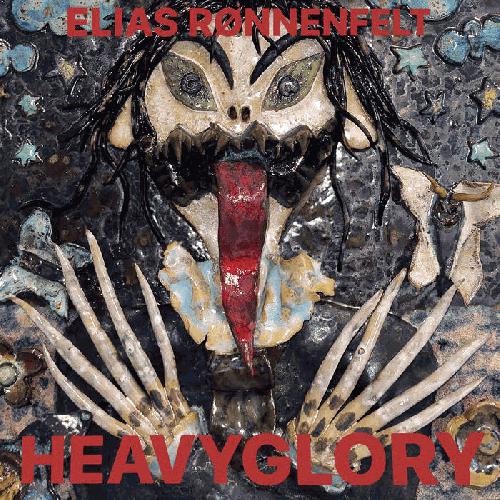
Heavy Glory’s desire to shine a spotlight on this ugliness makes itself abundantly clear, you don’t even have to look further than the album cover, yet there is something oddly hypnotizing about it if you look close enough. I think Rønnenfelt states it best in the opening song;
“Plenty sweetness midst the turmoil was a fact, I’d say. Love and kind gestures in the disarray”
The last time we saw Rønnenfelt branch out from Iceage was almost a decade ago with the final Marching Church album, but whereas 2016’s
Telling It Like It Is was still heavily ornamented by a full band laying down dark and dramatic grooves from the school of Nick Cave,
Heavy Glory finds Rønnenfelt reaching for his acoustic guitar to focus more on grounded story telling. Electric guitars do make an appearance as well, but only when necessary to beef up the bravado. “Like Lovers Do” opens the album with simple acoustic chords and a sing-along melody that feels deeply rooted in folk traditions. It’s perhaps the most stripped back and bare version of Elias we’ve ever seen, and it results in some of his catchiest and most heartfelt lyrical hooks to date as he croons over a rhythm section that bobs to and fro like it was made for cowboy boots on hardwood floors. Fifth track “No One Else” follows suit with this motif and ends up being my favourite song on the whole album due to it’s wistful vulnerability and ability to convey regret. When Elias sings
“I guess I could come knocking too but here I am not welcome anymore”, I feel it in the pit of my stomach, and it's not the only gut punch in the pipeline.
While there are some relatively upbeat and swayable rhythms on the album, a lot of
Heavy Glory is coated in a disquieting muck of despair and desperation, however cryptic and sweet it is presented. “Stalker” especially stands out as one of the most uncomfortable songs on the album, as beneath it’s disguise as a melancholic piano ballad lies a disturbing story about a juvenile grocery boy who becomes obsessed with a pregnant girl, stages an injury to become involved in her life (platonically), and when the baby’s absent father returns to repeat patterns of abuse, the boy murders him and goes to prison. It’s the type of story where nobody gets a happy ending, and all along these dissonant violins linger in the air like an organic substitute for squealing feedback just to compound the unease. This is the only song on the album that approaches this type of superbly off-putting storytelling, but I felt it needed a bit of a disclaimer, as it might rub people the wrong way if they don't pay close enough attention (and even still). Regardless, the theme of our internal ugliness being reflected outward persists.
As per the artist,
Heavy Glory was recorded in separate chapters across various locations over the span of a year, and it’s not hard to tell.
Heavy Glory is definitely a mixed bag of production and songwriting techniques that may prove to be a point of divisiveness, but even with the Spaceman 3 and Townes Van Zandt covers that bookend the album, or tracks like “Another Round” and “Worm Grew A Spine” which stick out like a sore thumb with their casio-esque mechanical drum beats, the mix and track sequencing does a great job at tying everything together into what feels like a storybook of ideas—none too disparate. Continuing to work with producer Nis Bysted over the years definitely helps to make this album feel like it's part of the same sonic universe as Marching Church, albeit softer. Rønnenfelt reaches back into a familiar bag of orchestral instruments, but they are utilized in a much more subtle way this time around, adding atmosphere instead of taking center stage. Double bass, piano, harmonica, violin, cello, and other oddities come and go throughout the album, making each song feel distinct with its own rich undercoat of baroque textures. I especially love the way the cello and double bass transforms "Unarmed" into a huge back half highlight.
I’ve always felt like Elias sounds his best when he is in full creative control, and
Heavy Glory feels like a shining declaration of independence that showcases the best of his abilities. I don’t care if we never get another Iceage album as long as Elias keeps plucking away on his own, it might even be better that way. There are a lot of subtle tone shifts and interesting lyrics to chew on here, and it takes more than a few listens to fully digest everything, but that’s the mark of a great album to me—one which is immediately enthralling, but without revealing all of it’s cards too soon. Luckily enough, almost all of these songs have a memorable hook and a deeply moving arrangement that makes the pill easy to swallow. Casual Iceage fans might not find enough raucous energy here to draw them over, but if you loved the last Marching Church album as much as I did, then this is just another excellent spotlight in Rønnenfelt’s bizarre theatre of loneliness. Come on in and take a seat.