Review Summary: A stone’s throw and ripples on the water
While listening to the new
Yes album, one cannot help but think back to the previous release. Its content clearly indicated the current state of the band had been in, showing a surprising lack of vigor. As surprising is that
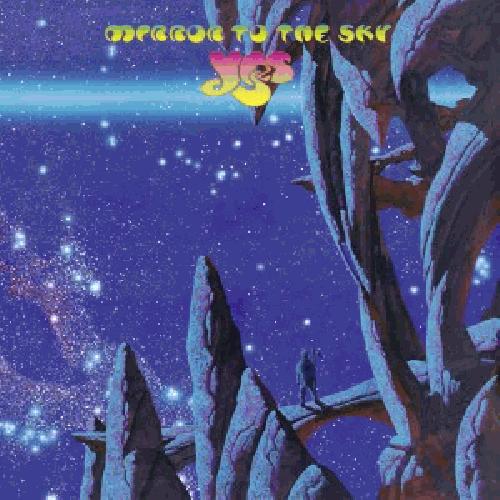
Mirror to the Sky attempts to remedy this, even though it occasionally manages to make similar fumbles. Still, on their twenty-third studio album, Yes is the closest to the classic period they’ve been in for a long while.
Right from the get-go the opening
Cut from the Stars exudes a sense of confidence in its movement towards the resurrection of the past. An energetic union of orchestral and bass lines gracefully takes the listener beyond the celestial borders, wavering between swelling revolutions and shimmering breaks.
The eponymous track is the album’s heart and the center of its gravity. Managing to sidestep all weaknesses present on the 2021 release, it comes off as well thought-out and smooth in its developments.
Mirror to the Sky is practically instrumental, save for a few vocal sparks, yet is capable of grabbing the attention for the entirety of its 14 minutes. It presents an effective piece of rock symphony, flawlessly segueing between its several movements.
These two cuts, accompanied with dynamic and sweeping
Living Out Their Dream, impress upon you the idea that the new album is a shining example of lessons learned. Yet the fault would be yours for crushing these blossoming expectations with a slab of unpretentiousness. The remaining tracks favor the sound of the later Yes, coming off as a poorly-written history book. Their chapters attempt to tell the audience of an army battling for a city in a faraway land, but they lack faces, characters and details, the particularities that would assist with immersion in the story being told. And we end up with something like
All Connected, a composition solid and reliable enough, and at the same time sorely missing a hook to hold together all of its elements.
The Yes of today misses the nerve and sharpness, which cannot be replaced with Howe’s guitar, as only his ornate and creative melodies struggle to carry the overbearing legacy of the progressive titan.
Surprising is the band’s decision to add some of the stronger compositions as bonuses. The peculiarly alien
Unknown Place is imaginative enough with its protuberant motive and occasional sideline, and the simpler yet no less engaging
One Second Is Enough could have confidently taken their right places on the album.
The new album feels like a stone thrown into the stagnant water. Its effect is simple – a loud splash followed by large and small ripples on the surface. Yet for this reservoir not to dry out, it needs more motion and fresh sources. And it is doubtful Yes will attempt to do just that.