On 1989 Favorites Lists

NEWS

03-11 Pink Floyd Win Court Battle
03-10 Pink Floyd Sue Their Label

» Edit Band Information
» Edit Albums

» Add a Review
» Add an Album
» Add MP3
» Add News

Pink Floyd
Progressive, Psychedelic, Blues

Pink Floyd is the premier space rock band. Since the mid-'60s, their music relentlessly tinkered with electronics and all manner of special
effects to push pop formats to their outer limits. At the same time they wrestled with lyrical themes and concepts of such massive scale
that their music has taken on almost classical, operatic quality in both sound and words. Despite their astral image, the group was brought
down to earth in the '80s by decidedly mundane power struggles over leadership and, ultimately, ownership of the band's very name. After
that time, the ...read more

Pink Floyd is the premier space rock band. Since the mid-'60s, their music relentlessly tinkered with electronics and all manner of special
effects to push pop formats to their outer limits. At the same time they wrestled with lyrical themes and concepts of such massive scale
that their music has taken on almost classical, operatic quality in both sound and words. Despite their astral image, the group was brought
down to earth in the '80s by decidedly mundane power struggles over leadership and, ultimately, ownership of the band's very name. After
that time, they were little more than a dinosaur act, capable of filling stadiums and topping the charts, but offering little more than a
spectacular re-creation of their most successful formulas. Their latter-day staleness cannot disguise the fact that, for the first decade or so
of their existence, they were one of the most innovative groups around, in concert and (especially) in the studio.

While Pink Floyd are mostly known for their grandiose concept albums of the '70s, they started as a very different sort of psychedelic band.
Soon after they first began playing together in the mid-'60s, they fell firmly under the leadership of lead guitarist Syd Barrett, the gifted
genius who would write and sing most of their early material. The Cambridge native shared the stage with Roger Waters (bass), Rick Wright
(keyboards), and Nick Mason (drums). The name Pink Floyd, seemingly so far-out, was actually derived from the first names of two ancient
bluesmen (Pink Anderson and Floyd Council). And at first, Pink Floyd were much more conventional than the act into which they would
evolve, concentrating on the rock and R&B material that was so common to the repertoires of mid-'60s British bands.

Pink Floyd quickly began to experiment, however, stretching out songs with wild instrumental freak-out passages incorporating feedback;
electronic screeches, and unusual, eerie sounds created by loud amplification, reverb, and such tricks as sliding ball bearings up and down
guitar strings. In 1966, they began to pick up a following in the London underground; on-stage, they began to incorporate light shows to add
to the psychedelic effect. Most importantly, Syd Barrett began to compose pop-psychedelic gems that combined unusual psychedelic
arrangements (particularly in the haunting guitar and celestial organ licks) with catchy melodies and incisive lyrics that viewed the world
with a sense of poetic, childlike wonder.

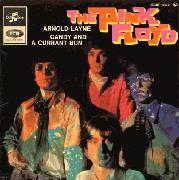
The group landed a recording contract with EMI in early 1967 and made the Top 20 with a brilliant debut single, "Arnold Layne," a
sympathetic, comic vignette about a transvestite. The follow-up, the kaleidoscopic "See Emily Play," made the Top Ten. The debut album,
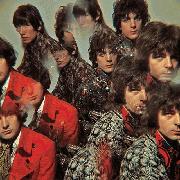
The Piper at the Gates of Dawn, also released in 1967, may have been the greatest British psychedelic album other than Sgt. Pepper's.
Dominated almost wholly by Barrett's songs, the album was a charming fun house of driving, mysterious rockers ("Lucifer Sam"); odd
character sketches ("The Gnome"); childhood flashbacks ("Bike," "Matilda Mother"); and freakier pieces with lengthy instrumental
passages ("Astronomy Domine," "Interstellar Overdrive," "Pow R Toch") that mapped out their fascination with space travel. The record
was not only like no other at the time; it was like no other that Pink Floyd would make, colored as it was by a vision that was far more
humorous, pop-friendly, and lighthearted than those of their subsequent epics.

The reason Pink Floyd never made a similar album was that Piper was the only one to be recorded under Barrett's leadership. Around mid-
1967, the prodigy began showing increasingly alarming signs of mental instability. Barrett would go catatonic on-stage, playing music that
had little to do with the material, or not playing at all. An American tour had to be cut short when he was barely able to function at all, let
alone play the pop star game. Dependent upon Barrett for most of their vision and material, the rest of the group was nevertheless finding
him impossible to work with, live or in the studio.

Around the beginning of 1968, guitarist Dave Gilmour, a friend of the band who was also from Cambridge, was brought in as a fifth member.
The idea was that Gilmour would enable the Floyd to continue as a live outfit; Barrett would still be able to write and contribute to the
records. That couldn't work either, and within a few months Barrett was out of the group. Pink Floyd's management, looking at the wreckage
of a band that was now without its lead guitarist, lead singer, and primary songwriter, decided to abandon the group and manage Barrett as a
solo act.

Such calamities would have proven insurmountable for 99 out of 100 bands in similar predicaments. Incredibly, Pink Floyd would regroup
and not only maintain their popularity, but eventually become even more successful. It was early in the game yet, after all; the first album
had made the British Top Ten, but the group was still virtually unknown in America, where the loss of Syd Barrett meant nothing to the
media. Gilmour was an excellent guitarist, and the band proved capable of writing enough original material to generate further ambitious
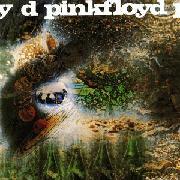
albums, Waters eventually emerging as the dominant composer. The 1968 follow-up to Piper at the Gates of Dawn, A Saucerful of Secrets,
made the British Top Ten, using Barrett's vision as an obvious blueprint, but taking a more formal, somber, and quasi-classical tone,
especially in the long instrumental parts. Barrett, for his part, would go on to make a couple of interesting solo records before his mental
problems instigated a retreat into oblivion.

Over the next four years, Pink Floyd would continue to polish their brand of experimental rock, which married psychedelia with ever-grander
arrangements on a Wagnerian operatic scale. Hidden underneath the pulsing, reverberant organs and guitars and insistently restated
themes were subtle blues and pop influences that kept the material accessible to a wide audience. Abandoning the singles market, they
concentrated on album-length works, and built a huge following in the progressive rock underground with constant touring in both Europe and
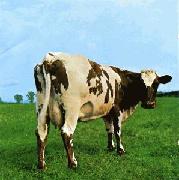
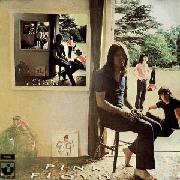
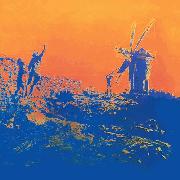
North America. While LPs like Ummagumma (divided into live recordings and experimental outings by each member of the band), Atom
Heart Mother (a collaboration with composer Ron Geesin), and More... (a film soundtrack) were erratic, each contained some extremely
effective music.

By the early '70s, Syd Barrett was a fading or nonexistent memory for most of Pink Floyd's fans, although the group, one could argue, never
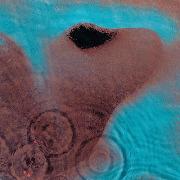
did match the brilliance of that somewhat anomalous 1967 debut. Meddle (1971) sharpened the band's sprawling epics into something more
accessible, and polished the science fiction ambience that the group had been exploring ever since 1968. Nothing, however, prepared Pink
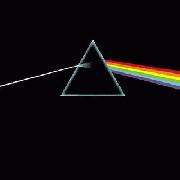
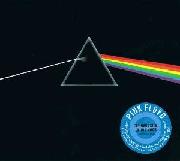
Floyd or their audience for the massive mainstream success of their 1973 album, Dark Side of the Moon, which made their brand of cosmic
rock even more approachable with state-of-the-art production; more focused songwriting; an army of well-timed stereophonic sound effects,
and touches of saxophone and soulful female backup vocals.

Dark Side of the Moon finally broke Pink Floyd as superstars in the United States, where it made number one. More astonishingly, it made
them one of the biggest-selling acts of all time. Dark Side of the Moon spent an incomprehensible 741 weeks on the Billboard album chart.
Additionally, the primarily instrumental textures of the songs helped make Dark Side of the Moon easily translatable on an international
level, and the record became (and still is) one of the most popular rock albums worldwide.

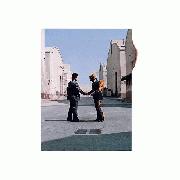
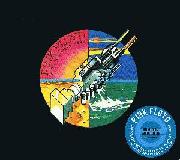
It was also an extremely hard act to follow, although the follow-up, Wish You Were Here (1975), also made number one, highlighted by a
tribute of sorts to the long-departed Barrett, "Shine On You Crazy Diamond." Dark Side of the Moon had been dominated by lyrical themes of
insecurity, fear, and the cold sterility of modern life; Wish You Were Here and Animals (1977) developed these morose themes even more
explicitly. By this time Waters was taking a firm hand over Pink Floyd's lyrical and musical vision, which was consolidated by The Wall
(1979).

The bleak, overambitious double concept album concerned itself with the material and emotional walls modern humans build around
themselves for survival. The Wall was a huge success (even by Pink Floyd's standards), in part because the music was losing some of its
heavy duty electronic textures in favor of more approachable pop elements. Although Pink Floyd had rarely even released singles since the
late '60s, one of the tracks, "Another Brick in the Wall," became a transatlantic number one. The band had been launching increasingly
elaborate stage shows throughout the '70s, but the touring production of The Wall, featuring a construction of an actual wall during the
band's performance, was the most excessive yet.

In the 1980s, the group began to unravel. Each of the four had done some side and solo projects in the past; more troublingly, Waters was
asserting control of the band's musical and lyrical identity. That wouldn't have been such a problem had The Final Cut (1983) been such an
unimpressive effort, with little of the electronic innovation so typical of their previous work. Shortly afterward, the band split up -- for a while.
In 1986, Waters was suing Gilmour and Mason to dissolve the group's partnership (Wright had lost full membership status entirely); Waters
lost, leaving a Roger-less Pink Floyd to get a Top Five album with Momentary Lapse of Reason in 1987. In an irony that was nothing less
than cosmic, about 20 years after Pink Floyd shed their original leader to resume their career with great commercial success, they would do
the same again with his successor. Waters released ambitious solo albums to nothing more than moderate sales and attention, while he
watched his former colleagues (with Wright back in tow) rescale the charts.

Pink Floyd still had a huge fan base, but there's little that's noteworthy about their post-Waters output. They knew their formula, could
execute it on a grand scale, and could count on millions of customers -- many of them unborn when Dark Side of the Moon came out, and
unaware that Syd Barrett was ever a member -- to buy their records and see their sporadic tours. The Division Bell, their first studio album
in seven years, topped the charts in 1994 without making any impact on the current rock scene, except in a marketing sense. Ditto for the
live Pulse album, recorded during a typically elaborate staged 1994 tour, which included a concert version of The Dark Side of the Moon in
its entirety. In 2005, Waters, Gilmour, Mason, and Wright reunited to perform at Live 8. Barrett and Wright passed away, respectively, in
2006 and 2008; both were taken by cancer.

In 2011, Pink Floyd launched an ambitious reissue program called Why Pink Floyd...? spearheaded by significantly expanded multi-disc box
set reissues of Dark Side of the Moon, Wish You Were Here, and The Wall. These sets marked the first time Floyd opened their vaults and
issued rare, unreleased recordings, including the original mix of Dark Side, heavily bootlegged live numbers like "Raving and Drooling," and
demos. « hide

Similar Bands: Roger Waters, David Gilmour, Porcupine Tree, Rush, King Crimson

LPs
The Division Bell
1994

3.4
885 Votes
A Momentary Lapse Of Reason
1987

2.9
650 Votes
The Final Cut
1983

3.3
641 Votes
The Wall
1979

4.3
2,695 Votes
Animals
1977

4.5
2,185 Votes
Wish You Were Here
1975

4.6
3,010 Votes
The Dark Side Of The Moon
1973

4.5
3,726 Votes
Obscured By Clouds
1972

3.5
472 Votes
Meddle
1971

4.2
1,353 Votes
Atom Heart Mother
1970

3.5
702 Votes
Ummagumma
1969

3.3
538 Votes
More
1969

3
299 Votes
A Saucerful Of Secrets
1968

3.7
628 Votes
The Piper At The Gates Of Dawn
1967

4
1,067 Votes
EPs
London '66–'67
1995

3.2
29 Votes
Live Albums
Pulse
2006

4.3
263 Votes
Is There Anybody Out There?
2000

4
170 Votes
Pulse
1995

4.1
264 Votes
Delicate Sound Of Thunder
1988

3.7
167 Votes
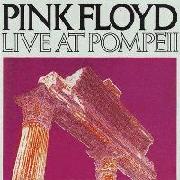
Live At Pompeii
1972

4.5
112 Votes
Compilations
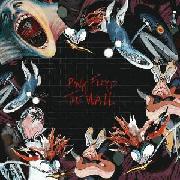
The Wall (Immersion Box Set)
2012

4.5
1 Votes
Wish You Were Here (Immersion Box Set)
11/08/2011

4.6
5 Votes
Dark Side Of The Moon (Immersion Set)
09/27/2011

5
5 Votes
A Foot In The Door
09/27/2011

2.1
9 Votes
Echoes: The Best Of Pink Floyd
2001

3.8
293 Votes
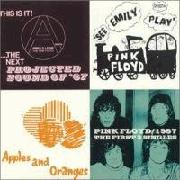
1967: The First Three Singles
1997

3.7
23 Votes
Works
1983

3.2
53 Votes
A Collection Of Great Dance Songs
1981

2.8
77 Votes
Relics
1971

3.8
143 Votes
The Best Of The Pink Floyd
1970

2.5
10 Votes

Music Lists
05.24.12  Favorite Intercourse Postions05.23.12  Its Raining Where Im From. What To
05.22.12  Vinyl Collection05.22.12  Sputnik User Most Likely To...
05.22.12  Digs05.22.12  Best Title Tracks
05.21.12  Intellectual Music05.21.12  Music To Spank My Ostrich To
05.20.12  I Smoke Pot Dude05.20.12  My Vinyl Collection :)
05.20.12  My Top 20 Favorite Album Covers In 05.18.12  Top 100..
05.16.12  Top 30 Favorite Songs Of 70's05.15.12  User Spotlight: Irving
05.15.12  Top 5 Favorite Albums Of The 70's05.14.12  My Top 10 Albums To Get Stoned To
05.13.12  Songs To Smoke Reefer To05.12.12  Moving To Boston
05.11.12  Albums Overshadows By The Band's Ot05.11.12  Weed Vs. Sobriety
» More Lists (1988)

Contributors: RedRawPoetic, Sound, rockandmetaljunkie, chargers26, Skyler, bigfanofthatband, Willie, poofles, JesusV4, AnotherBrick, The What, JustMightBeOK, Sharky, Mikesn, finnguitarist, Yardbirdy, MrKite, morrissey, tom79, Thor, Jacaranda, Alex101, pulseczar, Kingofdudes, fazrul666, Zaine, DesolationRow, CausticVodka, Med57, KILL, Nagrarok, PaperbackWriter, Irving, mynameisjosh, Deviant., rockandmetaljunkie, taylormemer, Skyler,

FAQ // STAFF & CONTRIBUTORS // SITE FORUM // CONTACT US

Bands: A B C D E F G H I J K L M N O P Q R S T U V W X Y Z

Site Copyright 2005-2012 Sputnikmusic.com
All Reviews Displayed With Permission of Authors | Privacy Policy