On 1045 Favorites Lists

» Edit Band Information
» Add a Review
» Add an Album
» Add MP3
» Add News

Pink Floyd
Progressive, Psychedelic

Pink Floyd can safely be tagged as one of the most sucessful bands of all time, and even now, some forty years after their debut, they are still loved the world over. They were one of the most important and influentual British progressive rock acts of the seventies (along with Genesis and Yes), and were instrumental in defining the "Space Rock" subgenre of the progressive movement. Worldwide album sales are estimated between 175 and 200 million.


Pink Floyd grew out of the remains of a jazz-rock band known as The Meggadeaths, Sigma Six, or The Screaming Abdabs (and oc ...read more

Pink Floyd can safely be tagged as one of the most sucessful bands of all time, and even now, some forty years after their debut, they are still loved the world over. They were one of the most important and influentual British progressive rock acts of the seventies (along with Genesis and Yes), and were instrumental in defining the "Space Rock" subgenre of the progressive movement. Worldwide album sales are estimated between 175 and 200 million.


Pink Floyd grew out of the remains of a jazz-rock band known as The Meggadeaths, Sigma Six, or The Screaming Abdabs (and occasionally simply The Abdabs). When this band broke up in 1965, former members Bob Klose (guitar), George "Roger" Waters (bass) and Nick Mason (percussion), along with the future keyboardist Richard Wright (who primarily played wind instruments at the time, including saxophone), formed the band Tea Set. They were joined shortly after by Syd Barrett, who quickly became the focal figure of the band. The name was changed to The Pink/Floyd Sound after the group was billed with another group called Tea Set (Barrett made the name up on the spot, deriving it from the monikers of blues guitarists Pink Anderson and Floyd Council). This name stuck, although it was shortened to Pink Floyd later on, in order to make it easier to remember.

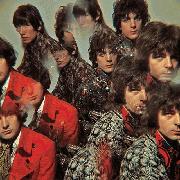
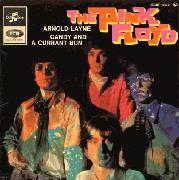
The early material of the band was written and sung mainly by Barrett, and his psychedelic influences are clear on these tracks. After a string of political and charity gigs in 1966, the band was given its first major recording contract. The heavily jazz-influenced Klose left the band to pursue a career in photography shortly before sessions began. In this year, the band released two singles, See Emily Play and Arnold Layne, the latter of which reached the UK top twenty. In 1967, the debut album The Piper At The Gates Of Dawn was released. Although it is often suggested that this release was influenced by the Beatles classic Seargent Pepper's Lonely Hearts Club Band, this is not the case (both bands worked on these albums at the same time), though similatities between the two (which are both considered amongst the best British psychedelic albums) is very clear.


By the end of 1967 and beginning of 1968, Syd Barrett was becoming increasingly erratic in his behaviour, due to his troubled past and, some say, his use of the drug LSD (although it is known that Barrett was a regular user of the drug, it is often claimed thet he was unknowingly given it in attempts to make his songs ever more psychedelic). Whatever the cause, Barrett experienced a mental breakdown, and became almost totally useless in live performances, sometimes standing absently on stage playing and singing nothing, at other times only strumming one chord through a whole gig, and sometimes stopping playing in the middle of a piece and detuning his guitar. Pink Floyd's gigs became increasingly chaotic, until it was decided by Waters that a new guitarist was needed for live performances. The band invited Syd's childhood friend David Gilmour to fill this role, although it was agreed that Barrett would continue to act as frontman and write songs. Unfortunately, Barrett's actions began to irritate the rest of the group, and after a period in which he constantly changed the lineup of the group and attempted to write a new song called Have You Got It Yet? (which, due to the ridiculously protean lineup and Barrett's highly individualised sanity, changed completely every time the band attempted to play it). After this, the band simply stopped taking Barrett to gigs, leaving gilmour and Waters to sing, and the entire band (at first) to write its songs. This marked the beginning of the "classic" lineup of the group.


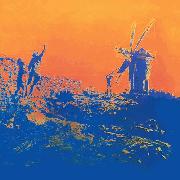
The band was now in a crisis situation, as the managerial and production team left with Barrett in order to work with him on a solo career. Luckily for them, Barbet Schroeder comissioned the group to write and perform the soundtrack to his film More. This album holds the first traces of the band's newly developing sound, as they moved away from the psychedelic into the waters of experimental rock, and the newly emmergent progressive movement.


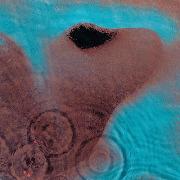
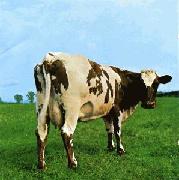
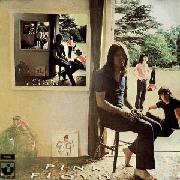
The remainder of the 1960s and the first years of the 1970s saw the band enter their most experimental peroid, releasing albums like Ummagumma (a disjointed and messy recording) and the bizzare Atom Heart Mother (which features an odd foray into the recording of a man's breakfast) . They continued to achieve minor success, Atom Heart Mother reaching #1 on the UK charts, but singles sales fell rapidly, and the band eventually stopped releasing them. In 1971, Pink Floyd released Meddle, which marks their first delvings into progressive music with the song Echoes, a 23 minute masterpiece structured in the manner of a classical suite, with several themes (some of them repeating).


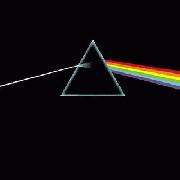
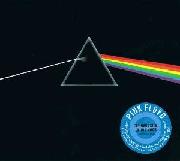
In 1973, Dark Side of the Moon, the band's most famous work (and one of the most iconic albums of all time), was released, elevating Pink Floyd to mainstream superstardom. This release has sold over 40 million copies worldwide, and remained on the US billboard charts for a record 14 years, and it is claimed that, at the time, EMI could not keep up with its popularity, even with pressing plants working non stop, and informed retailers that only half of every order could be delivered due to the huge demand for the record. Although all the members contributed to its writing, the lyrics were written solely by Waters (marking his first step towards the eventual dominance he held over the band after the recording of The Wall), as were all the group's lyrics until Waters left the group in 1986. This was probably the last time in which the atmosphere within the band was plesant, as after this Waters became increasingly controling, stifling the influence of Mason Gilmour and Wright on the band's sound.


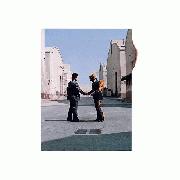
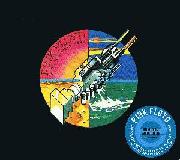
This state of affairs was not thouroughly enjoyed by the band, especially Roger Waters, who began to feel more and more cut off from the fans at such large gigs, who would be screaming and yelling (mostly for their favourite song, Money), and letting off fireworks (as if the stage set itself didn't provide enough of these). Waters had to put this out of his mind for the moment, however, as he needed to focus all his lyrical energies into writing a following worthy of the massive sucess of Dark Side. 1975's release Wish You Were Here is indeed such a release, although it never sold as many copies as its predecessor, it is still considered by many to be their best work. Featuring the tributes to Syd Barret Shine On, You Crazy Diamond (a 25 minute long suite of nine themes which is split in two on the album, with one part as the opening and one as the conclusion) and Wish You Were Here, it has an incredible emotional level, which was intensified by Barrett's appearence in the studio when the final vocal dubs for Shine were being recorded. Although he was not recognised at first by his former bandmates (having shaved off all his hair, and his eyebrows), tearful reintrioductions followed his appearence, and he even offered to add a guitar to the album, though this offer was declined. He left the studio some time later, and has not appeared in public since. The other two songs on the album, Welcome To The Machine and Have A Cigar are brutal attacks on the music industry, portraying it as an impersonal, faceless "machine", interested only in profit.


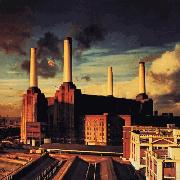
Despite the demand, Pink Floyd did not tour after the release of Wish You Were Here, and only appeared live again after their next release. Animals is widely agreed to be the most lyrically brilliant of all Floyd's albums, with Dogs in particular standing out as a stunning piece. Despite its unplesant concept of society's divisions (similar to those portrayed in the satirical novel Animal Farm by George Orwell) into the three groups of Pigs, Dogs, and Sheep (Pigs being the priests, rulers, and corrupt government, Dogs the predatory and ruthless capitalist businessmen and entrepeneurs who use and abuse the working class Sheep and take every opportunity they can to undermine both each other and their Pig masters), it does stand out, and is incredibly well written.


The world tour in promotion of Animals, entitled "Pink Floyd: In The Flesh", would be instrumental in the concepts of the next album, as by this time, Waters was utterly disgusted by the idea of stadium gigs. During one such show, where he had repeatedly asked the audience to quieten down during some of the more soft acoustic numbers, he became so angry that in order to continue playing, he forced himself to concentrate all his rage upon one particularly raucious member of the audience. Eventually, he could not restrain himself, and spat on the fan in sheer disgust, threw down his guitar, and stormed off stage, the rest of the band in pirsuit, leaving luckless session guitarist "Snowy" White to play a long blues outro in order to calm the incensed crowd.


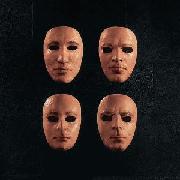
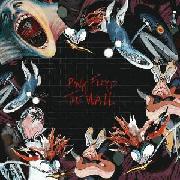
These incidents made Waters feel as though he was seperated from the fans by a "wall", and prompted him to ask himself the question "Why don't we cut ourselfs off from the audience literally, build a Wall between us and them, and force them to tear it down?". The resultant project, The Wall, was a double concept album, widely regarded as he best concept album ever written. composed almost entirely by Waters, with Gilmour contributing to the musical writing of only three songs (young Lust, comfortably Numb, and Run Like Hell), whilst Wright and Mason did not contribute at all to the album's composition. Whole libraries could be written about the intricate plot of this recording (which is really a semi-autobiographical account of Waters' life), but in brief, it tells the story of a dissilusioned rockstar called Pink, who, due to a traumatic childhood, begins to construct a mental wall around his feelings in order to protect him from harm. Several experiences in his later life add "bricks" to the Wall, until it is finally completed. However, it smothers his emotions and thoughts, and although he struggles to break free, he is trapped, and begins a slow decay into insanity, which is represented by the "Worms". Completely isolated from others behind his Wall, he goes catatonic, before being drugged heavily and forced to perform in a show where he hallucinates wildly and imagines himself at the head of a huge faschist rally. He eventually regains lucidity and realises that what he is doing is emulating the Nazis who killed his father in the war, and in the resultant mental struggle he comes to the conclusion that in order to avoid a total lapse into insanity, he must destroy his Wall. The most notable songs on the album are In The Flesh?, which introduces the series of flashbacks that make up The Wall concept, Another Brick In The Wall Parts One, Two and Three, which describe the way in which the death of Pink's father, his troublesome education, and his wife's infidelity all contribute to him isolating himself from reality, Mother, which describes how his overprotective mother contributed to the construction of the Wall by isolating him from reality in his early years, and the trio of In The Flesh, Run Like Hell, and Waiting For The Worms, which describe Pink's neo-faschist insanity prior to the destruction of the Wall, and Comfortably Numb, the sixth track on side four of The Wall is arguably the band's best song. This album proved to be the band's second most sucessful release, although it was really the end of the "classic" lineup that everyone knew and loved. Halfway through the recording, Waters called the group together, and demanded that Rick Wright leave the band at the end of recording. Wright refused at first, until Waters threatened to pick up the tapes and leave right at that moment, leaving the rest of the group to come up with another way to get out of their mounting tax debts. Wright was terrified into agreeing, and although he plays hammond organ, piano, and synthesisers on some of the album, he left before the recording was completed, so others, including David Gilmour, can be heard playing keyboards on the album. Wright appeared as a session musician on the Wall Tour, which featured some amazing visual effects, including giant sized puppets of Pink's psychotic glasweigian schoolmaster, and David Gilmour performing the two guitar solos from Comfortably Numb atop a false wall (which then collapsed at the end of penultimate number The Trial). One of these live performences of The Wall was released in 2000 as Is There Anybody Out There.


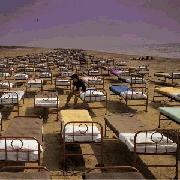
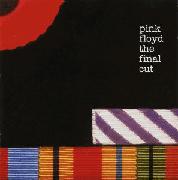
The next Pink Floyd album The Final Cut is basically a Roger Waters solo album; written in its entirity by him, and with Mason and Gilmour appearing as little more than session musicians. After its release, the band stagnated, and in 1965 Waters took a case to the High Court in an attempt to put an end to Floyd. He met with fierce opposition from David Gilmour and Nick Mason, who, along with Rick Wright (who could not yet rejoin the band due to legal complications) wrote and released the album A Momentary Lapse of Reason (featuring Guy Pratt as session bassist) in 1986, by which time Waters was forced to conceed defeat. Lapse was produced by Bob Ezrin, who also worked on The Wall. Waters was so bitter about this that he included the line "All men have their price, Bob, but yours was pretty low," on a later solo effort. The band never achieved their former sucess in sales for new albums after this point.


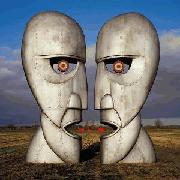
After the release of Lapse, the band retreated into dormancy until 1994, when they released The Division Bell, which, despite lacking Waters, is a worthwhile album, with clear contributions from Mason and Wright (and Wright's girlfriend reportedly wrote most of the album's lyrics). After a tour in 1994, the band stopped playing live, and appart from reforming along with Waters to play at the Live 8 concert in London on the insistance of Bob Geldof, they have not appeared live or released any new material since, and despite many rumours to the contrary, it has been stated by Gilmour that the band will never reform again. « hide

Similar Bands: Yes, Rush, Genesis, Jethro Tull, King Crimson

Pulse DVD
2006

4.3
170 Votes
Echoes (Greatest Hits)
2001

3.7
211 Votes
Is There Anybody Out There?
2000

4
114 Votes
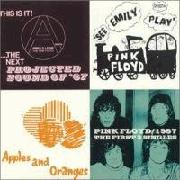
1967 Singles Sampler
1997

3.4
12 Votes
London '66-'67
1995

2.9
11 Votes
Pulse
1995

4
169 Votes
The Division Bell
1994

3.4
367 Votes
Delicate Sound Of Thunder
1988

3.7
110 Votes
A Momentary Lapse of Reason
1987

2.9
289 Votes
The Final Cut
1983

3.4
260 Votes
Works
1983

3.1
38 Votes
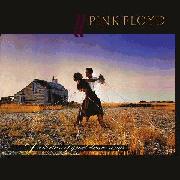
A Collection Of Great Dance Songs
1981

2.8
52 Votes
The Wall
1979

4.3
1,260 Votes
Animals
1977

4.4
940 Votes
Wish You Were Here
1975

4.6
1,410 Votes
Dark Side of the Moon
1973

4.5
1,795 Votes
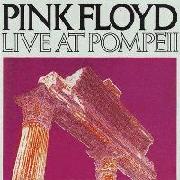
Live At Pompeii Soundtrack
1972

4.6
13 Votes
Obscured by Clouds
1972

3.5
181 Votes
Meddle
1971

4.1
573 Votes
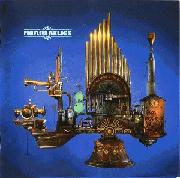
Relics
1971

3.8
96 Votes
Smoking Blues
1970

3.4
26 Votes
Atom Heart Mother
1970

3.5
284 Votes
Soundtrack to the Film More
1969

3.1
106 Votes
Ummagumma
1969

3.4
230 Votes
A Saucerful Of Secrets
1968

3.7
259 Votes
The Piper at the Gates of Dawn
1967

4
484 Votes

Music Lists
11.24.09  Searching For Music11.24.09  Who Needs Vocals Anyways?
11.24.09  Favorite Genres/Albums11.24.09  40k Last.fm Plays
11.23.09  It's Raining Outside11.23.09  Erotic Musical Selections
11.22.09  Lyrics Part 211.21.09  Albums I Gave Away
11.21.09  Vinyls Fucking Rule11.21.09  Flawless Albums
11.21.09  Grunge/mellow Grunge/mellow Metal11.20.09  Good Albums I Listened To This Week
11.20.09  Have Trigger, Will Travel11.20.09  Lyrics
11.19.09  Disturbing Similarities11.17.09  Favourite Non-metal Albums
11.16.09  Band/album/one Song Part 211.16.09  Best Albums Of All Time
11.16.09  Best Bass Albums11.14.09  Ok Computer = Dark Side Of The Moon
» More Lists (932)

Contributors: The What, JustMightBeOK, Sharky, Mikesn, finnguitarist, Yardbirdy, MrKite, morrissey, tom79, Thor, Jacaranda, Alex101, pulseczar, Kingofdudes, fazrul666, Zaine, DesolationRow, CausticVodka, Med57,

FAQ // STAFF & CONTRIBUTORS // SITE FORUM // CONTACT US

Site Copyright 2005-2009 Sputnikmusic.com
All Reviews Displayed With Permission of Authors | Privacy Policy