|
03-20 Fripp endorses Beat
02-11 R.I.P. Ian McDonald
04-07 King Crimson catalog to Spotif
01-31 R.I.P. John Wetton
» Edit Band Information
» Edit Albums
» Add a Review
» Add an Album
» Add News | King Crimson
If there is one group that embodies progressive rock, it is King Crimson. Led by guitar/Mellotron virtuoso Robert Fripp, during its first five
years of existence the band stretched both the language and structure of rock into realms of jazz and classical music, all the while avoiding
pop and psychedelic sensibilities. The absence of mainstream compromises and the lack of an overt sense of humor ultimately doomed the
group to nothing more than a large cult following, but made their albums among the most enduring and respectable of the prog rock era.
King Crimson originally grew out of ...read more
If there is one group that embodies progressive rock, it is King Crimson. Led by guitar/Mellotron virtuoso Robert Fripp, during its first five
years of existence the band stretched both the language and structure of rock into realms of jazz and classical music, all the while avoiding
pop and psychedelic sensibilities. The absence of mainstream compromises and the lack of an overt sense of humor ultimately doomed the
group to nothing more than a large cult following, but made their albums among the most enduring and respectable of the prog rock era.
King Crimson originally grew out of the remnants of an unsuccessful trio called Giles, Giles & Fripp. Michael Giles (drums, vocals), Peter Giles
(bass, vocals), and Robert Fripp (guitar) had begun working together in late 1967 after playing in a variety of bands: Fripp's resume included
tenures with the League of Gentlemen and the Majestic Dance Orchestra, while the Giles brothers had played with Trendsetters, Ltd. After
signing to Deram, the trio recorded their debut single, "One in a Million," and began cutting a full album, The Cheerful Insanity of Giles,
Giles & Fripp, during the summer of 1968.
Even as the album was in the works, however, the group's lineup was changing: ex-Infinity singers/guitarists Ian McDonald and Peter Sinfield
joined late in 1968, and Julie Dyble, who had passed through the first Fairport Convention lineup, signed on briefly as a singer. This lineup
recorded demos of "I Talk to the Wind" and "Under the Sky, " but soon dissolved: Peter Giles exited the scene in November of 1968, and
Fripp's childhood friend, vocalist/bassist Greg Lake, joined two days later. The new roster of Fripp, Lake, McDonald, and Michael Giles -- with
satellite member Sinfield writing their lyrics and later running their light show, among other functions -- officially became King Crimson on
January 13, 1969, deriving the name from Sinfield's lyrics for the "Court of the Crimson King" song.
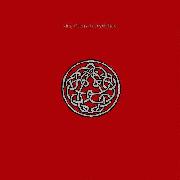
In July of 1969, the group debuted in front of 650,000 people at a free concert in London's Hyde Park on a bill with the Rolling Stones; later
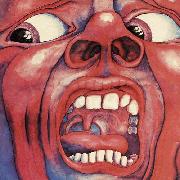
that month King Crimson ultimately recorded and produced their first album. In the Court of the Crimson King was one of the most
challenging albums of the entire fledgling progressive rock movement, but somehow it caught the public's collective ear at the right moment
and hit number five in England in November of 1969 -- four months later, the album climbed to number 28 on the American charts. Ironically,
at the peak of the LP's success the original band broke up: McDonald and Giles were becoming increasingly unhappy with the music's
direction, as well as the strain of touring. By November they decided to leave -- Fripp was so shaken that he even offered to exit if they
would stay. The original group played their last show in December 1969; Greg Lake, having joined the group last, was uncomfortable with the
idea of staying on with two replacement members, and had also been approached by Keith Emerson of the Nice about the possibility of
forming a new group. He soon decided to leave Crimson as well, but agreed to stay long enough to record vocals for the next album.
Whether there would even be a next album was debatable for a time after Fripp was offered the chance to replace Peter Banks in Yes. Finally,
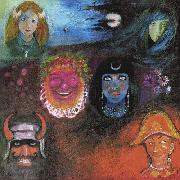
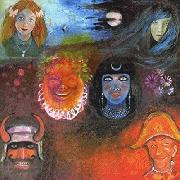
a new single ("Catfood") and album (In the Wake of Poseidon) were recorded early in 1970: essentially a Fripp-dominated retake of
In the Court of the Crimson King, Lake sang on all but one of the songs, Fripp played the Mellotron as well as all of the guitars, and a
new singer, Fripp's boyhood friend Gordon Haskell, debuted on "Cadence and Cascade." Fripp spent the month of August rehearsing a new
King Crimson lineup, consisting of himself, Haskell (bass, vocals), saxman/flautist Mel Collins (who had played on Poseidon), and Andy
McCullough (drums). This group, augmented by pianist Keith Tippett, guest vocalist Jon Anderson of Yes, and oboist/English horn virtuoso
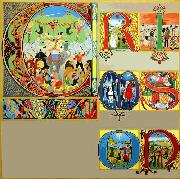
Marc Charig, recorded the next Crimson album, Lizard, in the fall of 1970, but Haskell and McCullough both walked out soon after it was
finished; with Fripp busy putting a new band together, Peter Sinfield took over the final production chores.
In December of 1970, Ian Wallace joined on drums, and after auditioning several aspiring singers including Bryan Ferry, Fripp chose Boz
Burrell as the group's new vocalist. The latest Crimson lineup of Fripp, Burrell, Collins, and Wallace emerged on-stage in April of 1971, and
for the next year, King Crimson was a going concern, playing gigs across the globe. The only casualty during the remainder of the year was
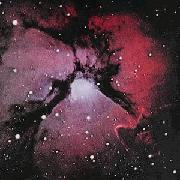
Sinfield, who split in December after Fripp asked him to leave. Their new album, Islands, got to number 30 in England, and number 76
in America; the band might've succeeded had it lasted for another album to make its case, but in April of 1972, this latest lineup broke up
after Wallace, Collins, and Burrell moved as a trio to join Alexis Korner in a band called Snape. Burrell later became the bassist with Bad
Company.
It seemed as though King Crimson had finally come to an end. Then, in July of 1972, Fripp put together a new band consisting of ex-Yes
drummer Bill Bruford, ex-Family member John Wetton on bass and vocals, David Cross on violin and Mellotron, and Jamie Muir on
percussion. Sinfield's successor as lyricist was Richard Palmer-James, who was otherwise invisible in the lineup. This group recorded their
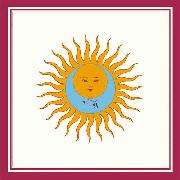
debut album, Larks' Tongues in Aspic, and made their debut in Frankfurt in October of 1972. Muir was out of the lineup by early 1973,
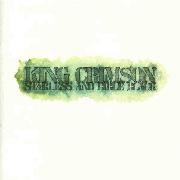
but as a quartet the band toured England, Europe and America while Larks' Tongues made it all the way to the Top 20 in England. In
January of 1974, King Crimson cut a new album, Starless and Bible Black, thus becoming the first lineup, discounting the departed Muir,
to remain intact for more than one American tour and more than one album.
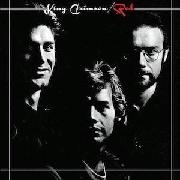
Alas, by July of 1974 even this long-lasting King Crimson lineup had begun to splinter. This time Cross was the one to exit, following a
performance in New York. With King Crimson reduced to a trio of Fripp, Wetton, and Bruford, one more album, Red, was completed that
summer with help from Cross and former members Mel Collins and Ian McDonald (who was soon to go on to fame and fortune as the
cofounder of the arena rock band Foreigner). Fripp disbanded the group on September 25, 1974, seemingly for the last time. Wetton later
passed through the lineup of Uriah Heep before going on to international success as the lead singer of Asia, while Cross later turned up on
The Rime of the Ancient Sampler, a Mellotron multi-artist showcase album.
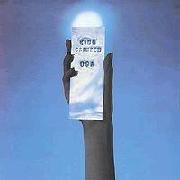
In June of 1975, 11 months after their last public concert, a live album called USA was issued, followed four years later by Fripp's first
solo album, Exposure. Finally, in April of 1981, Fripp formed a new group called Discipline with Bruford, bassist Tony Levin, and
guitarist/singer Adrian Belew. By the time their album was released in October of that year, the group's name had been changed to King
Crimson (the album was still titled Discipline, however). This band, with a herky-jerky sound completely different from any of the other
lineups to use that name, toured and recorded regularly over the years, which included full-length video productions; they splintered after
two more albums, 1982's Beat and Three of a Perfect Pair, a 1984 album.
King Crimson remained silent for about a decade, as compilations and vintage live performances continued to trickle out (including the box
sets Frame by Frame, which mostly covered classic studio material, and The Great Deceiver, which featured live performances
from 1973-74). Finally, in 1994, Fripp reunited with the Discipline-era lineup, augmenting the group with drummer/percussionist Pat
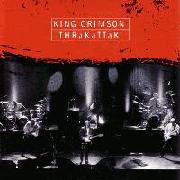
Mastelotto and bassist/guitarist/Chapman Stick player Trey Gunn. The EP VROOOM appeared late that year, setting the stage for a full
fledged comeback with 1995's Thrak. The album earned generally good reviews and re-established Crimson as a viable touring concern,
although it took until 2000 for the band to come up with a new studio album, ConstruKction of Light, amidst a continuing stream of
archive-clearing collections. In the five years between Thrak and ConstruKction of Light, the members of Crimson often
fragmented the band into experimental subgroups dubbed ProjeKcts. The idea was to mix things up a bit and generate fresh musical ideas
prior to the forthcoming album; in the meantime, drummer Bill Bruford and bassist Tony Levin left the band. Culled from the supporting
European tour, the live box set Heavy ConstruKction was released later in 2000. For the band's 30th anniversary, Fripp commissioned
the remastering of the first 15 years' catalog, featuring remastered sound and original album art. « hide |
Similar Bands: Mahavishnu Orchestra, The Enid, The Moody Blues, Black Midi, Robert Fripp Contributors: OmairSh, iGuter, Divaman, ExplosiveOranges, LokitheTrickster, Lowder91bird, Frippertronics, Mad., dariosoares, taylormemer, ThrashingWhiplash, rockandmetaljunkie, Ire, jefflebowski, siddha, Thor, Krow, Hoppoman, Nagrarok, The What, doqtor, clairvoyant, pulseczar, Veldin, Sowing, GratefulJerry, Frippertronics, adr, rrodjf, Nagrarok, Youtellme, KILL, tylerdurdenpt, rockandmetaljunkie, taylormemer,
|