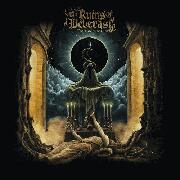
Careers built upon the appropriation of someone else’s style rarely amount to much, but that didn’t stop House of Atreus receiving their share of praise upon dropping their 2013 EP
Into The Brazen Bull. As an Arghoslent doppelganger minus the blatant racism, House of Atreus may seem like an ideal alternative for those who object to the former’s lyrical subject matter, but the issue remains that – as far as the music is concerned – Arghoslent are just
better. Make no mistake, House of Atreus still make enjoyable music, and if you’ve been holding out since 2008 for something new from the Virginian quintet,
The Spear and The Ichor That Follows may at least temporarily sate your withdrawals. However, no amount of insatiable yearning can compensate for House of Atreus’ debut full-length still feeling like a placeholder for something more substantial.
If there’s one accusation you couldn’t possibly levy at House of Atreus, it’s one of pretension; these guys make no claim of being novel and have their formula laid bare for all to scrutinise. Galloping, pentatonic riffs, quick successions of power chords and NWOBHM-influenced leads and solos constitute the vast majority of the guitar work, occasionally turning the wick down for something more brooding as in “Oresteia. The Unforgotten Scorns”. The song-writing is solid and direct, with each song hinging on an infectious, melodic refrain but avoiding the predictable verse-chorus pitfall that oh-so many melodic death metal acts fall victim to. Dan Huddleston’s mid-ranged, throaty yet surprisingly intelligible snarling allows the occasional lyric to be heard unperturbed and unassisted, but the performance itself feels a bit listless and one-dimensional, which brings us to the album’s primary drawback, homogeny.
The Spear and The Ichor That Follows may have riffs aplenty, but it’s ability to hold your attention begins to diminish as you approach the final few tracks, not from a lack of ideas, but simply a lack of contrast, musically and sonically. As far as the production is concerned, the album feels flat as a tack. Songs come and go without any variation in volume whatsoever, and during more climactic moments, you are left underwhelmed as frequencies are increasingly compacted together and begin to compete for space that just isn’t there.
All of this adds up to an album that is entertaining for what it’s worth, although lacking in any deeper impact that will have you returning time and time again. But should you find yourself in the mood for some no-frills riffage and stumble across a copy, there certainly are worse ways you could spend forty-two minutes. Ultimately,
The Spear and The Ichor That Follows is a good album that serves its purpose, just don’t expect it still be in steady rotation by the year’s end.