|
| |
|
|
|
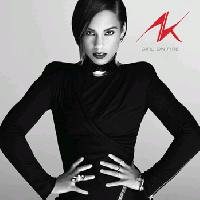
Review Summary: Girl on Fire is uneven, and its main blemish is its inconsistency, but Alicia Keys is still as ravishing on the keys and in her vocals as ever. Alicia Keys' fifth album Girl on Fire may arrive after her marriage to producer/rapper Swizz Beatz and the subsequent birth of her first child, but she isn’t exactly the “Brand New Me” that the album’s second track proclaims. Lyrically, Keys spends most of Girl on Fire in her usual comfort zone, tackling topics of love both lost and gained, but even while her choice in themes may not change too much, what also thankfully stays the same is Keys' bold and defiant voice of passion, and raw talent on piano that puts her above the countless other female singer/songwriters whose relationships serve as their main source of inspiration.
Indeed, Keys is just as much of the intoxicating diva on Girl on Fire as she continously proves to be time and time again. Five albums into her career, and the remarkable range of her melodies is as impressive as on her past outings, and still virtually unmatched by her R&B diva contemporaries. The difference this time around being that her attitude is appropriately accompanied with a dash of heat. Keys' Lavish piano structures primary focus is being smooth and soulful for a majority of the album, but room is also made for streaks of spunky jazz to get the blood pumping after the various downtempo sessions.
Girl on Fire is an album that mainly benefits as a collaborative effort. Keys teams up with a diverse and broad collection of artists to contribute their unique flavors into the mix, and so many new and differing ideas certainly aids the album in variety, but on the flipside, that doesn’t favor consistency all too much with its wide range of many different elements. With Nicki Minaj’s audacious and suitably blazing but still painfully out of place rapping on the “Inferno Version” of “Girl on Fire”, the seductively electric foundation laid by Jamie xx’s production on “When It’s All Over”, the proud and brazen hip hop strut of Dr. Dre and Sizz Beatz beats on “New Day”, the intimate and show-stealing golden age R&B throwback croons from Maxwell on “Fire We Make”, and the utter dominance of John Legend on both “Listen to Your Heart” and “When It’s All Over”, the spotlight of interest is definitely lifted off of Alicia Keys herself on her own album much too frequently, and the concentration of interest is directed at the new and unique aspects of her tracks instead of the women of the hour.
Even if there are copious amounts of areas on the album that can be more attention-grabbing than Keys herself, she’s anything but in the background, and her impeccable talent and suave characteristics haven’t weakened a bit, and show that this girl on fire isn’t burning out any time soon.
|
Album Rating: 3.5
Alright so, I tried to edit the album cover because I made a mistake when I created the page for the album and submitted a cover picture that was a png. file instead of a jpg., and it just went completely white, and when I submitted a jpg. file of the album art to fix it, it appears to be still white. I don't know if the mods have approved of my edit or not, but if it could please be fixed it would be much appreciated. Anyways, hope you all like the review.
| | | Album Rating: 2.5
not that big on the single but I might check it out. The White Album.
| | |
Continually fuck with the artwork and this is what happens. Hold up...
| | |
Fixed it, it wont update to the front page for awhile though
| | | Album Rating: 3.5
My bad, I did only make one edit after I made I created the page though. I would have assumed the site code or however you call it would have been able to support that without wigging out lol.
| | | Album Rating: 3.5
Also, thanks for the edit Dev. I saw that same pic from the first result of google images but wasn't too fond of the green outline haha.
| | |
You have been reviewing a lot of pop music lately. There's a good diversity in your range and it's very impressive, Alex. I have to break out of my Jazz/Prog/Psych zone and review a wider range of stuff.
Review is great as usual, Have a deserved POS!
| | | Album Rating: 3.5
Thanks good buddy. There's a lot more reviews of pop albums to come since it's the end of the year and I want to cover
the releases by some big names that no on else on the site reviewed. I've actually been concerned that I've been covering
pop albums a little too frequently lately, since I like to have diversity in what I review. So I think I'm definitely gonna mix
it up some more with some other stuff so I don't get people thinking that I only plan on reviewing the pop albums no one
else is interested in bothering to review.
| | |
sooo hot
want to touch the hiney
| | |
great review too
pos
| | | Album Rating: 3.5
Thank ya kindly good sir.
| | |
"Five albums into her career, and the remarkable range of her melodies is as impressive as on he past outings, and still virtually unmatched by her R&B diva contemporaries."
Missing an r from one of the 'her's. There are also a few instances of you omitting the ownership apostrophe from her surname that need fixing.
I don't want to seem nitpicky, because this is a good review, just thought you might like to know.
| | | Album Rating: 3.5
No dude, it's completely fine, all corrections are welcome. I'm actually really glad you pointed out the apostrophe
thing because I seriously had no idea what to write it as. It would be Keys' right? I know it's not Key's or Keys's, but
I wasn't sure so I just didn't put an apostrophe at all.
| | | Album Rating: 3.5
Thanks man! And you should look into her man, she really is a cut above the rest. Really comforting and mellow piano jazz music, and her talent is seriously just breathtaking at times. Her voice alone makes any album of her's at least worth a listen. I rec her to anyone.
| | |
Yeah I'm 99.9% sure it's Keys'.
Might check this out actually. I've never heard a full album from her but have always enjoyed her singles. She is extremely talented with both piano and voice.
A lot of similar artists tend to oversing just to show off their range but from what I've heard Alicia seems to avoid that shit and just do what's best for the song, which I appreciate. I can't stand pointless vocal acrobatics. It's the singing equivalent of Yngwie Malmsteen haha.
| | |
I have to break out of my Jazz/Prog/Psych zone and review a wider range of stuff.
nooooo, so few jazz, prog or psychedelic reviews as it is don't abandon your true calling paperback
| | | Album Rating: 3.5
@tommygun I agree completely man. So many other female vocalists strain their voices by going way
over the top a lot more than necessary, and it just completely dominates and weakens the music
backing them. You heard correctly though, Alicia knows how to control that effortlessly and do what's
best for the music as a whole. Also, this is a great album, but if you haven't heard an album by her
before and you're going to listen to one of them, I'd recommend either her debut or her sophomore LP,
as I personally consider those two to be her best.
| | |
Might as well get both then! Thanks for the recs mate.
| | | Album Rating: 3.5
Happy to help!
| | |
wow
| | | |
|
| |