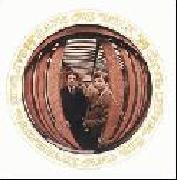
Review Summary: guess i'll have to face
To
Moms, the oh so wonderful
Moms, there should be a story: Brent Knopf left the band, leaving some sort of unspeakable trail behind him, surely? This half-band, a bassist, a drummer (now everything), just two of three distinguishable songwriters (who sound, it’s worth nothing, fairly similar, somewhere between Kings of Leon brassiness and, er, something else- Pitchfork suggested Blur, and on “One Horse,” you can’t deny their perception) and half a democracy. We should say, as we do, that this album is something different, or that Knopf has fractured his band; we should say this Menomena is new, rather than old, or that Menomena is dead. Menomena is certainly different.
But what Menomena now is, what
Moms really is, perfectly and devastatingly, is generic alt rock. Trumpets blaring on “Plumage,” or on the chorus to “Giftshoppe.” As “Heavy Is As Heavy Does” dropped, ahead of the album’s schedule, it was the straightest song of their career; a solemn piano ballad lamenting fatherhood, the patriarchy and the male form in general; a song maximising its pain as it realised it, getting heavier and more solo-mad as its own hopelessness was realised. And I, too, realised, as Seim or Harris (whichever one) sang it (“as prideful as a man he was / proud my father never was of me”), that this was the Menomena album that was going to hurt. They’ve hurt before, of course- certain lines from
Mines have cut like a knife, not least the very first (“I get so caught up in my ways”)- but
Moms is less about passing around the Deeler software and creating a randomised song, however sad, and more about lamenting family trees and the things that created us worse for wear. Together, Harris and Seim have created a rock album punching the stomach the way their lyrics do.
It’s almost strange to think this is the band behind
Mines, an album praised, in its entirety, for its innovation, and for its mysticism:
Mines bared its soul at times, but never in such an explicit way. Harris and Seim have never written songs like this, ones as direct and self-explanatory, and at times, ones as cinematic: “One Horse,” the album’s groaning sign-off, feels like a score, with its fine-tuned sad howls and sudden cuts; with its ability to stare right in the eye as it does; with just those words, “you were a one horse town,” and then the spiralling downward fall.
Moms is cinematic and serious, concerned with its own drama rather than the place it had to fill.
And so
Moms plays out like a classic alt-rock record, similar in my mind to
The Bends or
Change as collection of samey, reflective songs, each with their own fireworks. It’s not about innovation but introspection, and blown up.
Moms, instead of a long monologue exchanging thoughts on Knopf’s departure to us all, is an album of one-sided dialogue and unrequited longing; the title itself is dedicated to motherhood, but it seems untouched throughout the songs these two men write about. Instead, the themes are focused on the other women and elder men in these songwriters’ lives; the lovers within arm’s length in “Plumage,” the bastard dads in “Pique,” and the fools, guess who, letting them in on “Skinertercourse.” The music is endlessly climactic, and everywhere: “Plumage” weaves and weaves around its sharply-spun piano notes, and reaches its conclusion around the same time Menomena do: they rattle around the song like their very own epiphany, and “guess I’ll have to face” is sung, resigned, one more time before the song fizzles out pathetically. On “Pique,” the song halts on a similar, damaging revelation that has circled in and out of the songs existence until then: of being used, and accepting it, Menomena close the book, slapping one last guitar chord and crescendo in their wake. These are two songs to self, crossed with endless motifs about how nobody cares.
Moms is a collection of depressive love letters and we, rather accidentally, are their recipient.