|
| |
|
|
|
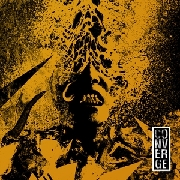
Review Summary: Twelve steps to bleeding oneself dry of humanity. As beautifully portrayed as it is in fiction, love and everything assigned with it can be the most crushing defeat any individual will experience in their existence. It is the most frequently conversed premise in music and the most relevant kind for everyone, varying from expressions of dedication and adoration to the grief of not being loved. Regardless of my pretentious evaluation, there is no record sharing the same premise (at least in my listening experience) that can be held in the same bleak light as Converge’s masterpiece, Jane Doe.
From its frenetic, two-piece opener, ‘Concubine’ and ‘Fault and Fracture’, Jane Doe is conceived. She is bitter, marred and devoid of everything that makes a human being what it is. Like her name suggests, she is the anonymous dead. Voiceless and fuming with anger, her story is told through the gut-wrenching, often inaudible screams and harmonies of vocalist and lyricist, Jacob Bannon. Though it may seem like a hindrance to its telling, the inaudibility of Bannon’s voice – once familiarised with – is needed to fully understand and appreciate Jane Doe. Each of the twelve tracks is a retelling of the events in a relationship she shared with another human being, leading up to her transformation in the apocalyptically beautiful closing title track. The vocals are backed by the masterful Kurt Ballou, Nate Newton and Ben Koller, who constantly trade technical blows with Bannon, creating a perfectly chaotic backdrop for these events. To delve deeper, the lyrics express more than what is apparent upon first listen through the cryptic vocals (deafening screaming for no apparent reason). There is a reason, and that reason is to feel for her as she can no longer do so.
Every second of Jane Doe’s forty-five minutes is airtight, masterfully executed and raw, leaving no room to breathe as this bitch ruins you in her wrath. So few artists can express emotion and passion vocally, lyrically and instrumentally as Converge have done with Jane Doe, especially in such an inaccessible and vulgar manner. It is easy to not understand and hate Jane Doe at first, but it is difficult not to embrace and love her with time. In all her fury and ugliness, she is a keeper.
| other reviews of this album |
IsItLuck? EMERITUS (5)
Converge create an unforgettable masterpiece....
laterenima (5)
Something I needed to do for a radio thing. It's not entirely a review, but it basically f...
Confessed2005 (5)
...
Cuban Pete (5)
...
bustyagunz (4)
Jane Doe kicks like Tang, and overall is a remarkable accomplishment. Kudos to Converge f...
shrapnel (4.5)
One of the angriest, most brutal albums you will EVER hear...
Lelle (5)
Despite its inacessible nature, Jane Doe has managed to touch the hearts of many listeners...
Tyrael (2)
With Jane Doe, Converge find themselves trapped inside their own anger....
puertasmagicas (5)
A hurricane of everything that makes you feel alive, especially pain....
Counterfeit (5)
Enrique's heart, it hurts......
chambered89 (5)
Converge lay it all out on the line and end up recording one of the best albums of the 200...
Alondite (5)
Near impenetrable, but those who endure will find something memorable, and dare I say, bea...
Timmah99 (5)
I want out....
Defeater (5)
Personal experience solidifies a legitimate record....
IntriguingSergei (4)
You will react to this....
theashesfromautumn01 (5)
You can't rape the willing....
ImpOfThePerverse (1)
"A tale told by the idiot Jacob Bannon, full of sound and fury, signifying nothing."...
Jasmine~ (2.5)
So, how much do you love this album as a whole?...
Booberry (5)
...
crandynewman (2.5)
This definitely isn't the worst album I've ever heard but it's really only okay; not as go...
raidynC (5)
A classic in every since of the word...
|
Album Rating: 5.0
inb4 same review as everyone else.
I only started listening to Converge this passed February. Been working through their records in order of release and quite slowly (haven't bothered with EP's). I've been eating, drinking and sleeping Jane Doe for the past two weeks, so yeah, explains the score and all the cock sucking present in this review.
Sorry for the pretentiousness in it, too. I didn't want to sound too much like an amateur posting dodgy reviews on Tumblr.
| | | Album Rating: 5.0
@Michael: The album's 11-years-old and reviewed to death. I'd rather focus on the concept of it and the album as a whole, seeing as it's a concept album, than break it into pieces and write a lengthy review where I'll blabber about things I don't know and risk repeating what's been said before. I do wish I could learn about music on deeper levels (instruments and all) than what it is at face value.
@foxxxy: Thanks, dude. I'd write more if I knew more about music. D:
| | | Album Rating: 4.0 | Sound Off
Yeah this review is awesome. I clicked on this review with the "urgh another jane doe review" kind of attitude but the brevity/the concentration on the concept rather than the music made this a really, really enjoyable read. Props, especially considering it is only your second. Hope to see you around and posting more.
| | | Album Rating: 5.0
this desperately needed another 5 review
anyway good review pos'd
| | | Album Rating: 5.0
amazing review, well done! pos'd
| | | Album Rating: 5.0
@TheSpirit: Thanks very much for the positive feedback. I'd read enough reviews of the album prior to listening to know that it is incredibly technical, but I doubt I could have produced a review that expressed what I enjoyed about it while differentiating from the mass of reviews praising it as the holy grail of metalcore if I'd talked about instrumentation and whatnot. I'm not too familiar with musical terminology either.
@Insurrection: I'm waiting on IcyLily to drop in here and show me how to write real reviews, lol.
| | | Album Rating: 5.0
@SpiritCrusher: So many Spirits. :o Thanks!
@foxxxy: Never heard of 'em. Will look them up and see what I can do after listening.
| | | Album Rating: 5.0
nah, I'm spirit crusher, the other guy is just spirit. but I won't crush him, he's ok
| | | Album Rating: 5.0
^lol^
| | | Album Rating: 5.0
@System: Not sure if Aussie or fond of Steve Irwin.
| | |
Lived in Australia 23 years, never heard anyone say crikey. Disappointing.
Also, minor critique - inaudible = can't be heard. Unintelligible, maybe? Nice review though, very succinct.
| | | Album Rating: 2.0
meh
| | | Album Rating: 4.0 | Sound Off
i have still never been compelled enough to listen to this album in its entirety
| | | Album Rating: 2.0
you're not missing much
| | | Album Rating: 2.0
Dude great review for your second.
What foxxxy said, keep writing!
| | | Album Rating: 4.5
Ohlookitsthisthreadagain.jpg
| | | Album Rating: 2.0
Hahaha, you know it!
| | | Album Rating: 5.0
"no room to breathe as this bitch ruins you in her wrath".
Pos.
| | | Album Rating: 5.0
@Esky: Haha, my friends used to say "crikey" jokingly. I've never used it myself bar once in my 9 years here. Also, thanks for pointing that out.
>Not sure how to edit my review
Thanks to everyone for the positive feedback yet agian. Lub joo gais.
| | | Album Rating: 4.0 | Sound Off
the edit feature is currently down
| | | |
|
| |