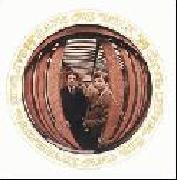
Review Summary: I, too, wish my cat could talk.
No matter how many times you say fun I still can’t have it.
The Only Place feels like the greying out of Bethany Cosentino, the same sentiments she’s been pushing just rolling on to the next page, blowing through the streets, always the streets of California, like an endless gust of weed smoke. It is talking to the same people from the same couch as trashy TV rolls quietly and insignificantly in the background, thinking about fixing the same problems but clinging to them like little nuggets of meaning, pining over the same guy and being too lazy to do anything about it. We’re still supposed to take it to the beach and get high to it and take pictures of our cat to go on a clip reel with it. We’re right where we left off: “when I’m with you,” when we’re together, “I have fun.”
Okay. Either this record is boring, or I am. Don’t tell me. The way
Crazy For You ended epitomized that record, because it held up a mirror to its mad dependence. All the weed was taken out of the f
ucking boredom of waiting for your prospective boyfriend to not come ‘round; going half out of your mind and talking to your pet was a replacement act and saying the same thing over and over and over again was to calm the thoughts that consumed. The distractions only lasted minutes. Minutes? Perfect! Write a pop song. “When I’m With You” was a fitting conclusion of all these little anxieties, because what is an album about ‘weed and my cat and being lazy a lot’ without the fun you could be having? I guess it’s nothing.
The Only Place is kind of nothing.
In its nothingness, everyone will tell me, “it sounds like every Best Coast album” and point back to
Crazy For You as being as simple as what follows it. It will reinforce a lyric like “I wish my cat could talk,” a line that is pretty much the holy grail of simple lyrics. Give me a simple lyric any day, for all the obvious reasons: it’s honest, or it speaks to an experience we’re probably all having, or maybe it’s just easier to connect with someone over having a bad day than it is to grasp for meaning in it. When I hear a simple lyric of Cosentino’s, though, it’s simple because she has nothing to say and no experience to share with anyone but the dude she’s talking to. This would be James Last’s surf pop muzak if not for the elongating of words like “fun” and “life” and the constant repetition of that
nothingness refusing to dig through the surface. All Cosentino has to write about on
The Only Place is the distractions, and last time around that nothingness, played on a purely upbeat note, lasted the summer and died out as fast as the weather did.
And so the most hideous crime
The Only Place commits is that, yes, it is an “emo” record, just like Cosentino said she wanted- emo not for the guitars twinkling or the skramz screaming, but for the gloomy, plodding place it exists in. It comes from exactly the same place that the sun shone on for
Crazy For You, but with the grey shading. That doesn't refer to the inevitable move away from being a lo-fi band, either- it barely factors. Again we’re at home with Cosentino on the couch, listening to her music the way it was lazily written, and lazy isn’t an insult: it’s like a badge a Best Coast record proudly pins on itself. Everyone is out somewhere with something to do and
The Only Place is at home with the curtains pulled over.
The result of darkening the room by the beachside is this: the drab distractions of fun and the sad twee ballads all move
The Only Place at a precisely made, sluggish speed through half an hour of Cosentino’s white lies about being unhappy and pissed off with friends. It’s all held up through jangle pop played in a major key, but in this even Cosentino seems unsympathetic towards her character- the melancholy is only ever piled on a happy melody and the never-ending sadness, as on the guitar-chugged “Last Year,” seems like a red herring played for the hell of it (again: nothingness). That’s why the song indulges in the surface of lyrics rather than the words on the inside, and why Cosentino becomes more entertaining when she expresses her “la de das” instead of the problems she seems little interested in. “What a year this day has been” is a lyric that reflects the grungy, uncaring nature of this track, but any venting on
The Only Place remains simply that on this is an album of surface- nothing goes any deeper, because nothing can come from nothing.
What
The Only Place entails is a list of reasons to not be having fun, but the description is unsympathetic, and not only in Cosentino’s lyrics: the music feels entirely out of step with the record’s moody facade, like eleven new versions of the impassioned, irony-smacked “Positively Fourth Street” but intending none of the scorn Dylan did in his music. And this is just how Cosentino writes; her dad-rock-surf-pop guitar music sounds nothing but sincere in its airy and carefree construction, and as a result it means as little as her lyrics do, just in the complete opposite way. What results is a bizarre record of contrasting base material, a bittersweet record without any of the force behind what make those words sting.
The Only Place becomes a record that is suggesting everything but giving none of it, and what sucks the most is that this badge of laziness is entirely of Cosentino’s choosing. She neutralises these two parts into some sort of post-beachcore album that cynically rhymes words like “fun” with themselves, just to point to as it was last time around.
So it's fitting that the best moment here is “Up All Night,” a song entirely about feel: it’s long and gloomy, but dedicated to its story for more than four minutes, ditching the superficial twee brevity for a little focus on what’s upsetting Cosentino and how a pop song of little guitar riffing can speak for that. This side of Cosentino feels none forced as the band rollicks through guitar licks and percussive snaps that dot together the bitter with the sweet in a more palliative way: Cosentino is wistful on this closer, and the music actually
reflects that, without a smile. Best Coast’s style feels fully connected here, rather than just presenting the description, the “emo,” as an afterthought. It’s as if the saving grace to Cosentino’s sadness is the time dedicated, which makes sense for this album of nothing; there’s something buried under “Up All Night,” finally. But until this moment, I’m not having fun with
The Only Place, and when it’s down and out I’m not
not having fun with it. All I feel towards this record is some sort of angry indifference, which feels like the exact empty feeling that it impacts on us; like nothing matters as long as I hear the same words and the same chords over and over until all I can say about this record is nothing, over and over. This is an empty record, and the exact opposite of what it means to write classic music, because through all its forced smiles and fake problems, it’s an album that means absolutely nothing to me.