Review Summary: Paradise Lost have finally completed their transition away from the electro-rock influences and have also embraced a bit of their past -- but at what cost.
Ever since Paradise Lost started to move away from their electro-rock experiments, each album has been met with a 'return to roots' prediction that has never turned out to be accurate. Based on that, it should come as no surprise the band's thirteenth album,
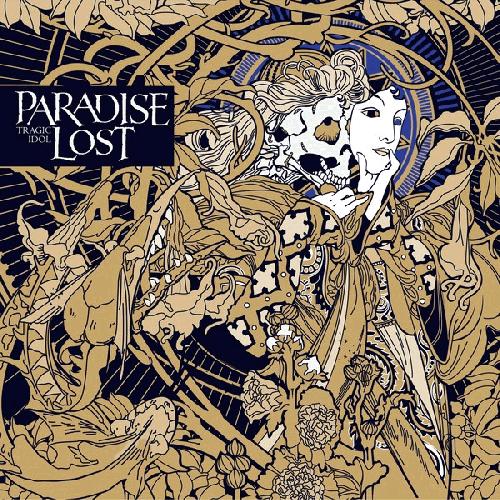
Tragic Idol, is being met with the same hopeful prediction, but, for the first time, it's not too far off base. At its foundation,
Tragic Idol continues down the same evolutionary path as every post-
Believe in Nothing release, but it has also gone a step further by including an obvious nod towards the band's early material. For those that haven't been following each release since
Symbol of Life, Paradise Lost have been slowly phasing out the electro-rock influences in favor of gritty riffs and grittier vocals, and
Tragic Idol is the culmination of that effort. The electronics, clean singing and most other elements first introduced on
One Second have been removed, and in their place is a collection of songs that rely almost entirely on dirty metal riffs and morose leads.
The album's opening song, 'Solitary One,’ almost seems to serve as a transitional piece between the band's immediate past and the rest of
Tragic Idol. It is the only song to make prominent use of keyboards, and it is also one of the few to feature a cleanly sung chorus. Due to these additional features, 'Solitary One' is one of the more instantly memorable tracks and a great way to ease into the album. After that initial track, the band are fully committed to delivering a powerful assortment of songs based on doom-oriented riffs, wailing leads and a traditional metal edge. This has allowed
Tragic Idol the distinction of containing some of the band's heaviest material, and definitely some of its most visceral. The problem is they might have taken their current evolution a little too far.
Don't take that last statement the wrong way, though – the prominent reintroduction of early nineties influences is most certainly welcome, but it didn't have to come at the expense of the remaining electro elements. The most noticeable problem created by the lack of electronic elements is that a whole undercurrent of melody is missing, and nothing is present to make up for it. This has the immediate effect of making each track much less instant. This issue is intensified by Nick Holmes' decision to sing almost entirely in the gritty style he has slowly been phasing in since
Symbol of Life. The loss of electronic elements and clean singing has left a gaping hole in each track the older influences just can't fill. Thankfully, despite these shortcomings,
Tragic Idol is still a solid album, it's just not as exciting or diverse as its last few predecessors.
It’s unsurprising that the final step away from the electro elements would involve bringing back a more prominent early-nineties influence. There are definitely hints of
Shades of God in the band's use of gritty riffs, and there's no denying
Icon was an influence when it came to creating the morose leads, but those influences don't ever make
Tragic Idol sound like a band paying homage to themselves. The foundation of
Tragic Idol is still the same catchy, well-crafted style of the previous few releases; just with less electronics and clean singing. The extra effort
Tragic Idol requires is definitely worth the time, though, because at this stage in the game Paradise Lost are incapable of making anything mediocre or even average even if they did finally lose a step.