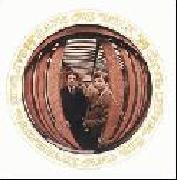
Review Summary: Switchfoot, minus everything good about Switchfoot
10 of 17 thought this review was well writtenHonestly, Switchfoot never got the love they deserved during their prime years. Despite their huge and predictable popularity amongst the adolescent, sheltered Christians of the mid-2000s, the band’s easily recognisable (and ultimately stigmatic) anthems, such as the ubiquitous ‘Meant to Live’ and ‘Dare You to Move’, prompted more serious and ‘reputable’ music listeners to hold their stinking noses high in the air and lump the band in with the likes of Kutless and Skillet. That was a mistake. If you were to make a mixtape of Switchfoot’s best and most creative songs throughout their career, you would have a near perfect album - you’d have enough to convince any anti-Switchfoot supremacist to think of the underappreciated San Diego band in a totally different light. However, if you subbed that mixtape out for a copy of their newest effort, Vice Verses, well then,congratulations!: you’ve shot the band in the collective foot. Historically, Switchfoot is a band that has always experimented instrumentally and has not only coined one of the best ballads of the last decade (‘The Shadow Proves the Sunshine’) but they are a band that has also managed to branch out into full-onweird territory with Oh! Gravity. and Eastern Hymns for Western Shores without compromising their marketable and unmistakable Switchfoot-ness. Vice Verses, on the contrary, is everything that Switchfoot’s successes are not. It’s everything someone who’s only heard Switchfoot’s singles might expect a Switchfoot album to sound like: brash, adrenaline-laced and unbelievably hammy. And in the end, that’s what Vice Verses truly is - Switchfoot, minus everything good about Switchfoot.
It’s immediately obvious from opener ‘Afterlife’ and lead single ‘Dark Horses’ - the ambassadors of Vice Verses’ unspectacular tracklisting - that the album is perhaps the band’s most aggressive work to date. It’s not often that this aggression is ever convincing or thoughtfully constructed though. Nothing is Sound had its fair share of heavy riffs and tortured, wretching vocals but it was all in good tastefulness - Vice Verses goes balls-out with an array of gang vocals, heavy fuzzed-out power chorded riffs and the band’s best impression of a hyper-energetic rock band.
But there’s a lot of things Switchfoot haven’t done before onVice Verses and a bulk of it that Switchfoot still have yet to do well. A lot of songs feature a one-note, rapidy-delivered melody (i.e. ‘Rise Above It’, ‘The War Inside), most songs feature convincingly edgy, if uninventive, guitar lines and a few songs even feature genre-borders being crossed but it never quite crosses the line into being catchy or fun. The melodies just aren’t there. In the album’s strangest cut, ‘Selling the News’ starts with a Black Key-esque offbeat distorted bassline and tape-echoed guitar line that underscores Jon Foreman’s spoken-word/rap verses before entering a classic 90’s pop R&B chorus that you’d never once think to hear on a Switchfoot song - and while the theatrical, staccato shot bridge is pretty engaging, it’s hard to get over the sound of Foreman’s dramatic, spoken delivery. It’s not any help that Vice Verses seems to be overwrought with the need to inspire listeners: lyrical cuts like “I want to thrive, not just survive” on the The Beautiful Letdown-esque ballad of ‘Thrive’ and ‘The War Inside’s tacky “I get the feeling that we’re living in sci-fi, I get the feeling that our weapons are lo-fi” are cringe-worthy, at best. When Foreman sang “We were meant to live for so much more, have we lost ourselves?” all those years ago, it was equally hammy but the band had, at the very least, a solid hook to ham it up to. Now we’ve got spoken word choruses and Thousand Foot Krutch riffs.
But wasn’t it just a few years ago Jon Foreman treated us to his seasonal solo EPs, a collection of songs that proved the man possibly brilliant in any facet and an excellent songwriter to boot? Then how come only three songs on Vice Verses come close to resembling the same man who wrote us ‘The Cure for Pain’ and ‘Daisy’? It’s just the slow-burning but tastefully arranged ‘Souvenirs’, the calculated, anthemic build-up of ‘Where I Belong’ and the acoustic closer ‘Vice Verses’ that seem in any bit related to Foreman’s glory days. While the title track might actually be a fairly decent track underneath the gratuitous helping of reverb given to Foreman’s voice and ‘Where I Belong’ is a slightly standard U2-aping affair straight out of the books of
The Beautiful Letdown, it’s the Anberlin-esque ‘Souvenirs’ that eventually ends up being the best track on Vice Verses. ‘Souvenirs’ is the kind of clever, pop-rock/indie song that the band can write - gentle but interesting clean guitar lines weave back and forth over eachother underneath climactic Coldplay climaxes and Foreman’s solid-as-ever melodic ear. It’s all a bit cliche but undeniably fun and moreso, undeniably catchy. It’s this ear for melody that is so sadly missing from Vice Verses - the song manages to have just as much energy as the rest of the album but it doesn’t compromise melody or quality to achieve its sound. And while ‘Restless’ provides a decent enough U2-style melodic climax and ‘Dark Horses’ has a fantastic pair of verses, ‘Souvenirs’ is really the only glimmer of hope we still have for that perfect Switchfoot album. It’s one of the best songs the band has written on one of the worst collection of songs the band has released. But thank goodness they included it: our worst fears - the complete and irreversible corruption of Switchfoot - are not realised and our hope remains. Until then, we Vice Verses as a reminder to listen to the Switchfoot of the yesteryear. Until then, we have one more Switchfoot album to pretend didn’t happen.