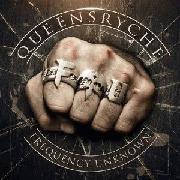
Review Summary: Queensrÿche's Empire is the first of it's kind, a commercial ace in the hole and an achievement from the early progressive metal genre.
It always was ironic that Queensryche released
Empire at the peak of their career.
Rage for Order may have placed them on the Billboard, but it was
Operation: Mindcrime that gave progressive metal an accessible musicality with strong songwriting. Entertainment Weekly was and still is unarguably unheard of for progressive metal to be featured on, and Queensryche dominated conventional radio with nearly half the album to a point that their reputation changed with the result of commercial success.
Despite what may be expected,
Empire is only a silhouette of a concept album and not much of a coherent story at all. There's a love interest between the hit songs ‘Jet City Woman’ and ‘The Thin Line,’ arguably standouts for the band, and the latter being an easy method for those looking to start exploring the band's hard hitting blurred line between rock and metal influences, but the underlying features don't carry very much progression. The consecutive ‘empire’ theme starts up with the well constructed city-themed operatic blues piece ‘Della Brown,’ and on to the straightforward rocker "Resistance," and a centerpiece title track that is very pointed and politically direct for the 80's, making a statement about the levels of crime in America at the time.
Empire doesn't attempt to form a solution to the problem and avoids a storyline with characters, morals and a heartbroken love story, and it prefers to leave itself ambiguous. It's easy to digest, rather than pushing forth their boundaries obtained from their previous albums. They succumbed to shrugging off the progressive metal influence of their unmistakable logo in lieu of melodic and commercial accessibility. The band's voice is still there however, as their ‘tri-ryche’ on the album cover pierces the pillar appearing to form ‘EMI,’ as a jab at their own label.
Geoff Tate’s vocals personalize moments like "Anybody Listening?" and "One and Only" with unrivaled clarity, and you can tell he enjoys boasting his powerful four-octave range. Elsewhere, the track ‘Resistance’ acts as a vehicle for his progressive aspects alongside the building vocals of 'Silent Lucidity.'
Empire might grow with every listen, but two decades later Geoff Tate’s marriage to band manager and ex-dancer Mrs. Tate will prove difficult to holding the charade that ‘Jet City Woman’ was written about her and not his previous wife, who was actually a flight attendant from The Jet City. For that matter: it's not hard to respect the songwriting in
Empire, it's just easier to criticize it.