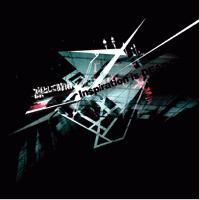
Review Summary: A careening post-hardcore journey, Inspiration Is Dead depicts a talented and ambitious band nearly redefining their genre.
Over the past half-century, rock bands have evolved greatly from the humble origins of guitar, drums, and electric bass. Today rock is open to all sorts of instrumentation, ranging from strings to keyboards to computers and just about any other instruments you can think of. When acts like Arcade Fire, Grizzly Bear, and Animal Collective, with their panoply of instrumentation, seem to hog all the spotlight, is there really any room left for a good old-fashioned power trio? Artists like Cream, Rush, The Police, and others effectively perfected this stripped down band arrangement, and since more and more bands have five or more members, it might be easy to assume that in the 21st century only lo-fi and punk bands even bother anymore with such a seemingly limited setup.
Fortunately, Ling Tosite Sigure disagrees. Formed in 2002 in the Tokyo suburb Saitama, Sigure proves that not only is the power trio not dead, but it's still quite capable of creating powerful, original music. After a string of demos and debut album #4 in 2005, Sigure's 2007 album Inspiration Is Dead revealed that the band is easily one of the most creative and hard-working post-hardcore acts anywhere, and more than capable of creating an indie rock classic - which is just what we find with Inspiration Is Dead.
Opening tracks Nakano Kill You and Cool J starting the album with an one-two punch of high-velocity rocking. Drummer Pierre Nakano stands out here, pounding away furious, complicated rhythms that are part Ahito Inazawa, part prog metal. Guitarist/singer TK shrieks and screeches at high pitch with bassist Miyoko providing contrast. TK's searing Telecaster tones clang with Miyoko's distorted bass through a roller coaster of tempo changes, complicated chord progressions, and noise freakouts that can be as disorienting as they are exciting.
Indeed, one of the most striking things about Sigure is just how original they manage to sound despite a relatively simple band setup. The vocals are evocative of screamo, but never quite manage to cross the line; likewise for guitar, as TK tends to pick complicated clean arpeggios even in rather ferocious moments instead of going for much more cliched and unoriginal power chord riffage (which is virtually absent from Sigure's music.) Fittingly, all members of the band are incredibly skilled at their instruments, but never come across as indulgent Guitar World-ready virtuosos only interested in impressing other musicians, as the band's surprisingly mainstream success in Japan will attest to. Despite their rather bombastic nature, the three members effectively keep each other in check just enough to avoid wandering into cheesy wankery as their tightly and meticulously-constructed songcraft shines through the instrumental onslaught.
The third track, Disco Flight, is a striking change from the thrashy nature of the first two tracks. Beginning with a thunderous, intimidating bass line, it takes off as TK fires away with trancelike, delay-soaked guitar hook. The mainly vocal-oriented verse shows a strong level of restraint that contrasts heavily with TK's Number Girl-esque guitar breakdown halfway through. A furious, drum-heavy ending verges on metal without quite crossing into total meathead territory as TK and Miyoko trade vocals back and forth. It's one of those rare tracks that's likely to inspire both dance-floor addicts and would-be guitar heroes; no easy feat for any artist.
Knife Vacation shows the band at the apex of their screamo inclinations, and an excellent lead guitar riff and strong melodies - not to mention Miyoko's delicious bass playing - make it another of the album's best tracks. The best part, though, is a pulsing shift in mood towards anthemic outburst at the end of the track as TK and Miyoko scream call-and-response. AM3:45 offers a respite from the madness of the first four tracks to focus on Miyoko's vocals over atmospheric guitar playing. "The world vanishing, forgetting, floating in weightlessness," sings Miyoko, one of the album's simplest yet best-written songs. Surprisingly, Sigure are at least as skilled at creating an ethereal, atmospheric song that hovers somewhere between shoegaze and post-rock as they are at constructing thundering prog-pop. In half the time of a Mono track, they go from haunting chimes to searing suspended chords without coming across as contrived or unnatural.
Their website describes their sound as based on icy, ephemeral melodies, which they accomplish immaculately. If most post-hardcore sounds fiery and confrontational, Sigure evocates nocturnal frigidity. Their name, as well, can be translated as "A Cold Autumn's Rain," and perhaps it's this deliberate emphasis on atmosphere and the sensation of driving deliriously through a rainy urban nightscape that keeps their songcraft so focused.
The next track, Akai Yuuwaku ("Red Temptation") kicks things into high gear once again. Miyoko's haunting vocals dominate the spacey intro before TK kicks in with an explosive lead guitar in the background before taking over the song with his furious screaming and various proggy twists and turns. 1/F no Kanshoku is one of the album's finest tracks, a driving, melancholic composition that accentuates TK's skill in constructing songs around airy, original chord progressions, particularly the outro of last minute or so, which is perhaps the most beautiful-sounding moment of the whole album.
However, TK and company have probably saved the best for last with the hilariously-titled "I not crazy am you are," which displays the band's compositional ability at its finest. This is undoubtedly the album's most technically impressive track, as TK screams and shouts high-speed in coordination with his buzzsaw guitar riffing, the most hysteric hook-laden musicianship this side of Geddy Lee. But like most Sigure songs, it doesn't demand the listener possess a degree in Music Theory to enjoy it, and is easily one of the most likable tracks on the album and nearly single-worthy (arguably, even better than the similar-sounding major label debut single Telecastic Fake Show.) The closing track, Yuukei no Kioku ("Memories of Sunset"), is probably the closest thing to an uplifting song you'll ever hear out of this band, but is rescued from relative mediocrity (if only in comparison to the high standard the group has already set for itself) by TK's minor-key instrumental in the middle. TK's vocals are the weak point, sounding a little strained in comparison to the rest of the song.
An exhilarating, invigorating, and original album, Inspiration Is Dead stands out as Sigure's strongest achievement out their first three releases. At once complex, emotional, and melodic, it has something for just about every fan of indie and hard rock music, and shows that the classic rock setup has a lot of life left to it. It's one of the best hard rock albums of the past fifteen years and establishes Sigure as a ferocious force in modern rock music - a title that Sigure more than lives up to on their following albums.