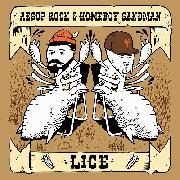
Review Summary: dodododododo kicker of elves
There are at least two reasons as to why Robert Pollard’s
Bee Thousand, as opposed to the indie community befallen after him, will appeal to the world outside it; that is, the rock fans, the metalheads and all that. Firstly, the personality he has - constricting all ideas of delicacy, modesty and politeness - thrives on a boyish attitude. 'Uncle' Bob's arrogance instigated the idiosyncratic, quirky music movements of so many to follow, so when he performs he plays up to it; he doesn't shy away from his sing alongs, he demands that [his] music will never die and - for all his stage time - he's a self-loving drunk. With a discography that just keeps on expanding (and
six releases pinned down for 2009), Robert Pollard moves from limit to limitless, more interested in being out there than writing masterpieces.
Secondly is the music. Pollard is clearly a big fan of himself, but so is he equally appreciative of pop rock. On Bee Thousand it’s noticeable - his band plays an extremely dampened version of indie, with all rock 'n' roll sentiments prioritised. In fact, his first question is
Are you amplified to rock?, asked in “Hardcore UFOs”, which is seemingly prophetic of the answer:
Bee Thousand opens and continues with raw rockers.
Pollard is also a fan of R.E.M., and ever since the Guided By Voices project began way back with
Forever Since Breakfast, he has been living the tickled fan dream to sound exactly like them. On
Bee Thousand, it seems he and Tobin Sprout find a rock ethic of their own, which is likely attributed to the hyper speed at which his tracks are played. Pollard’s attention span simply implodes which, as would later become one of Guided By Voices trademark tricks, abolishes a song as soon as it loses the tiniest hook. Catchiness is vital; songs in the one-minute region blitz through the songs biggest characteristic – the distorted, ever amplified approach to “Buzzards and Dreadful Crows”, the acoustic wilderness packed into “Yours To Keep” and “Kicker Of Elves” with its bouncy do do do hums, are all Pollard’s perfect evidence that all you need is one minute.
Whatever Pollard is singing about (which most aptly is nothing, however it often extends to experiences in his older life jobs as somehow teaching and being a father), it becomes muffled by fluctuating fuzz, which would later define the album as the lo-fi influence so many needed. Its four-track recording goes on to contribute to the comfortable, spontaneous scheme developing in Pollard’s mind, so in the longer home stretches (say, the songs that can actually change for their three minute run time) it’s hard to picture a redeveloped, freshly packaged and fixed version of
Bee Thousand – to most purists, it would demean the album. “Tractor Rape Chain” is deafening, and its quiet-loud transition may as well be planned. Similarly when “I Am A Scientist” was spring-cleaned for a greatest hits edition, its crackly surface was bid farewell to, leaving nothing but Pollard’s trebly, confident voice. “I Am A Scientist” didn’t need polishing – it was already the album’s smashing hit when it could barely be heard.
Throughout the entirety of
Bee Thousand you’ll probably miss something due to the distortion, the fuzz, the noise – whatever it is you call it. But in the same year as Pavement would be releasing
Crooked Rain, Crooked Rain, one of their many crowning accomplishments, an album far less produced and with far more heart would be plucked out of the air by the hand of Robert Pollard and accomplice Sprout. So even if “Peep-hole” is strummed by the soft rock renegade to sound as if a whisper on the wind,
Bee Thousand will appeal to anyone - under any influence - to sing along to what they can just ably hear.