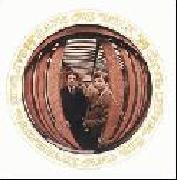
Review Summary: With help from the local culture, Kevin Martin creates a weird, enjoyable dubstep record.
London Zoo is an obnoxious album. In a good way.
London Zoo works in somewhat the same way that I was so baffled by
Kala, almost to the point that I would drive myself insane repeating the slightly off-kilter chorus in “$20” just to understand why, against all forces of logic, it worked. If that doesn’t sound like your cup of tea, then it’s probably not.
I guess this is where I could praise Kevin Martin as a true dubstep producer, storming a scene that the more beautiful, poetic
Untrue set on fire. The truth is, I just don’t know. Researching and reporting facts would be more redundant than beneficiary (especially since Pitchfork has arranged two– that’s right,
two!– articles for your intellectual pleasure), and I think I enjoy
London Zoo more because of what the recently-revealed Burial always concealed his identity for: It’s all about the music, man.
In the wake of
London Zoo’s release, and the deflating act of Burial’s revealed identity, taking Martin’s reggae-influenced dubstep at face value uncovers a thriving, rather exhilarating product. The same stone-cold precision is there (gunfire sound clips as percussion in “Angry”; steel drums keeping time in “Jah War”), but Martin’s template is large with life, fired toward the sun. Local flavor plays a healthy part in the London-based producers line-up, showing in the various guests that provide a good deal of appeal the album holds.
The standouts (Warrior Queen, Ricky Ranking, Flowdan) aren’t necessarily picked for their appealing attributes (they spit rapidfire lyrics, usually in grimy, accented manner) but for how they work in context of Martin’s difficult melodies. He doesn’t necessarily make it easy; the guests must work in tandem with the fast pace, erratic transitions and sometimes-poetic tangents. Warrior Queen proves to be the most agile, taking the samba-bongo beats in “Insane” to startling heights in her youthful, affected flow. Obvious comparisons to M.I.A. aside, Warrior Queen is helped immensely by Martin’s care, no more so than when the bass is pushed full force against the laser firing, and the verses become a gritty sort-of sultry (the Tears for Fears reference is just showing off).
The men, barring one, all prove just as able to navigate Martin’s sprawling, messy excursion. Ricky Ranking is engulfed in a funky-techno bass for “Murder We,” and the song’s proposed premonitions (“This is getting so bad / the streets are flowing red”) are turned absolutely giddy by Ricky’s sung refrain. When Martin incorporates more of an obvious influence, Dizzee Rascal-poised UK garage, the outcome become instant highlights. “Jah War,” already unwieldy in space-age synths, is further driven by Flowdan’s crass, alien spit. Like Ricky Ranking before him, Flowdan might not prove to be altogether threatening or thug, but there’s a cool factor that plays into
London Zoo that proves machismo plays second fiddle to a pretty good time.
When
London Zoo faults, and surprisingly it’s mostly contained to one track, it permits a look at the train wreck Martin could have produced. “You & Me” is the album’s slowest track, an unsettling and overly precocious crooner that trips up an otherwise consistent flow. It doesn’t help that Roger Robinson feels completely out of place amidst the more colorful guests, but the song’s descent into the album’s defining instrumental track, and the transition more than makes up for it. “Freak Freak” is a particularly engaging song, mingling the dense production with a spacious atmosphere, the beats hollow and cold. Mixing the percussion in with otherworldly noises and an inconsistent bass, Martin proves it’s his skill that drives
London Zoo and not the dressings on it.
London Zoo ends strong, with Warrior Queen getting her last say in with “Poison Dart,” a slow-grinding electronica-based number, just more of the
Kala-like bafflement that makes Warrior Queen’s full yell attractive, stripped by the echo evident in the bass. “Judgement” proves to be Martin’s baby though, and Ricky Ranking is more than ready to take on the task of pulling together the song’s five-minutes. The song segues seamlessly behind a sweet ballad and a heavier, more dissonant rap battle, evidently grimy but always prominently melodic. Ricky’s flow, the words nearly indistinguishable, are a highlight and Martin agrees. A surprising delight is the synth-riff featured as a bonus at the end of the track’s five minutes of silence; it’s inconsequential in design, but it sounds good.
When I look back on what I’ve written, I do seem to like
London Zoo more than I should. But I like that it’s obnoxious, that I can find new ways to dissect it, and most of all, that I enjoy doing that. That an album can match enjoyment with artistic merit in a year that has largely seen albums go one way or another is a joy in itself. That it’s so f
ucking weird is just showing off.