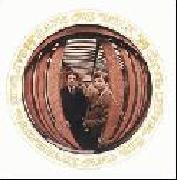
Review Summary: Pharrell and a church organ nearly destroy this solid rock'n'roll album.
They almost got lost in the mix when they emerged in a wave of garage rock bands with the definite article stapled to the front of their names, but the fact that the working title for this record was
The World's First Perfect Album is a timely reminder that, regardless of the music, the idea of The Hives is perfect. As far as influences go, they ticked the right boxes - The Stooges and The Rolling Stones, basically - while avoiding any notion that they might make anything other than really dumb rock'n'roll. While the press fell over themselves to namedrop Television and The Velvet Underground (The Strokes, in Q), or Led Zeppelin and Muddy Waters (The White Stripes, in Rolling Stone), or Nirvana and The Beatles (The Vines, in NME) in conjunction with other bands, The Hives set out their stall as obviously as possible from the off. If you want cute acoustic songs about hotels, *** off - The Hives made rock music the way old people in pubs tell you it should be made, and they made it with such conviction and energy that they spawned at least one classic song in "Hate To Say I Told You So", and have become such a mainstream concern that they've now got Timbaland and the WWE on their CV.
But then, three studio albums and one notable compilation in, you begin to wonder where exactly The Hives can go from here. The Stooges only managed three albums before collapsing, and it's taken roughly tdouble the amount of years for The Hives to make it to album #4 as it did for the Stones to get from their debut to the sonic U-turn of
Their Satanic Majesties Request. What's more, those were very different times - in those dark days of non-internet, bands were allowed to release the same album over and over again. The Hives don't have the same luxury that AC/DC and Status Quo had, so reinvention is key to survival if they don't want to get slaughtered in the press and replaced in people's affections by a younger, prettier model.
Despite the fact that first single "Tick Tick Boom" is structurally and spiritually indentical to "Hate To Say I Told You So", the band appear to have acknowledged this - in addition to the Timbaland duet (which doesn't appear here, sadly), they've got Pharrell Williams and Jacknife Lee on board as producers. So once the first five tracks - all balls-out rock songs, all pretty good - are out of the way, we're treated to a series of attempts at rebranding The Hives, starting with a circus organ soloing for two and a half minutes on "A Stroll Through Hive Manor Corridors". The following "It Won't Be Long" sees the first real stab at a new sound, and it's a sound swiped from Arctic Monkeys and We Are Scientists. The way the guitars are produced, the melody, the clumsy lead guitar, the slightly spastic rhythm - it's just "Teddy Picker" with some extra instruments, and without the wit. It's not necessarily a bad song, but it feels forced. So far, sooooo not successful.
And what about "T.H.E.H.I.V.E.S."? I never thought I'd see the day when I accused a rock band made up of five fat, hairy Swedes of wishing they were Prince, but they clearly do. This song sounds far more like N.E.R.D. than it does T.H.E.H.I.V.E.S., which is probably the reason for the title. I don't know which party to blame for this - Williams for failing to allow the band to be themselves on their own album, or The Hives for failing to assert their personality on the song. Either way, I'm amazed that this song made it to the final tracklisting. It's clumsy, irritating, and embarrassing.
The best thing you can say about what follows is that the attitude that defines the band is at least back. "Return The Favour"'s melody and chord progression may be a little too indebted to American pop-punk, and "Giddy Up" isn't far removed from "T.H.E.H.I.V.E.S.", but they're that much more bearable because they're believable. The same can be said of three of the last four songs - they see the band trying out new things ("Puppet On A String" almost feels like a Tom Waits song), never quite sounding comfortable, but doing just enough not to fail. It's unfortunate, then, that "Square One Here I Come" gets buried amidst all these tracks - it's the best thing here, boasting as it does Howlin' Pelle's best approximation of Mick Jagger's "Satisfaction" swagger yet. The band meanwhile are in quirky form, with a jumpy binary riff peppered between the kind of knowingly amateur major chord riffs that made their name.
The Black And White Album is a confused album, and it makes for a confusing listening experience. And yet, once you view it from distance, it feels like a good album all the same. There's at least six songs here that will delight the band's long term fans (the first five and "Square One Here I Come"), and in truth, there's only two outright bad songs. The experiments actually reveal a surprisingly versatile side to the band, even if they do leave you in no doubt what this band is best at. If anything, it simply feels rushed, a feeling not helped by the fact that the version of this album sent to journalists for review had three songs missing because they weren't finished. Although on first impression there's a lot to mock here, once
The Black And White Album settles in, and you've figured out which songs to skip, it's as enjoyable as any of their previous albums.