|
05-28 R.I.P. Gregg Allman
» Edit Band Information
» Edit Albums
» Add a Review
» Add an Album
» Add News | The Allman Brothers Band
The story of the Allman Brothers Band is one of triumph, tragedy, redemption, dissolution, and a new redemption. Over nearly 30years,they've
gone from being America's single most influential band to a has-been group trading on past glories, to reach the 21st centuryasone of the most
respected rock acts of their era.
For the first half of the 1970s, the Allman Brothers Band was the most influential rock group in America, redefining rock music anditsboundaries.
The band's mix of blues, country, jazz, and even classical influences, and their powerful, extended on-stage jamming alteredthe ...read more
The story of the Allman Brothers Band is one of triumph, tragedy, redemption, dissolution, and a new redemption. Over nearly 30years,they've
gone from being America's single most influential band to a has-been group trading on past glories, to reach the 21st centuryasone of the most
respected rock acts of their era.
For the first half of the 1970s, the Allman Brothers Band was the most influential rock group in America, redefining rock music anditsboundaries.
The band's mix of blues, country, jazz, and even classical influences, and their powerful, extended on-stage jamming alteredthestandards of
concert performance -- other groups were known for their on-stage jamming, but when the Allman Brothers stretched asongout for 30 or 40
minutes, at their best they were exciting, never self-indulgent. They gave it all a distinctly Southern voice and, intheprocess, opened the way for
a wave of '70s rock acts from south of the Mason-Dixon Line, including the Marshall Tucker Band,LynyrdSkynyrd, and Blackfoot, whose music, at
least initially, celebrated their roots. And for a time, almost single-handedly, they alsomadeCapricorn Records into a major independent label.
The group was founded in 1969 by Duane Allman (b. Nov. 20, 1946-d. Oct. 29, 1971) on guitar; Gregg Allman (b. Dec. 8, 1947) on
vocalsandorgan; Forrest Richard ("Dickey") Betts (b. Dec. 12, 1943) on guitar; Berry Oakley (b. Apr. 4, 1948-d. Nov. 12, 1972) on bass;
andClaudeHudson ("Butch") Trucks (b. May 11, 1947) and Jaimoe (Johnny Lee Johnson) Johanson (b. July 8, 1944) on drums. Duane andGregg
Allmanloved soul and R&B, although they listened to their share of rock & roll, especially as it sounded coming out of England in themid-'60s.
Theirfirst group was a local Daytona Beach garage band called the Escorts, who sounded a lot like the early Beatles and RollingStones; they
laterbecame the Allman Joys and plunged into Cream-style British blues, and then the Hour Glass, a more soul-orientedoutfit. The group landed
acontract with Liberty Records with help from the Nitty Gritty Dirt Band, but the company wasted the opportunity ona pair of over-
producedalbums that failed to capture the Hour Glass' sound. The group split up after Liberty rejected a proposed third LPsteeped in blues and
R&B.
Duane Allman began working as a session guitarist at Fame Studios in Muscle Shoals, AL, and it was there, appearing on records byWilsonPickett,
Aretha Franklin, John Hammond, and King Curtis, among others, that he made his reputation. In 1969, at the coaxing of ex-OtisRedding manager
Phil Walden, Allman gave up session work and began putting together a new band -- Jaimoe came aboard, andthenAllman's longtime friend Butch
Trucks and another Allman friend, Berry Oakley, joined, along with Dickey Betts, with whom Oakleywasplaying in a group called Second Coming.
A marathon jam session ensued, at the end of which Allman had his band, except for a singer --that came later, when his brother Gregg agreed
to join. They were duly signed to Walden's new Capricorn label.
The band didn't record their first album until after they'd worked their sound out on the road, playing heavily around Florida and Georgia.Theself-
titled debut album was a solid blues-rock album and one of the better showcases for guitar pyrotechnics in a year with more thanitsshare, amid
albums by Cream, Blind Faith, the Jeff Beck Group, and Led Zeppelin. It didn't sell 50,000 copies on its initial release, butTheAllman Brothers
Band impressed everyone who heard it and nearly everyone who reviewed it. Coming out at the end of the 1960s, itcouldhave passed for a
follow-up to the kind of blues-rock coming out of England from acts like Cream, except that it had a sharper edge --theAllmans were American
and Southern, and their understanding of blues (not to mention elements of jazz, mostly courtesy of Jaimoe) wasasnatural as breathing. The
album also introduced one of the band's most popular concert numbers, "Whipping Post."
Their debut album attracted good reviews and a cult following with its mix of assured dual lead guitars by Duane Allman and DickeyBetts,soulful
singing by Gregg Allman, and a rhythm section that was nearly as busy as the lead instruments, between Oakley's rock-hardbassand the dual
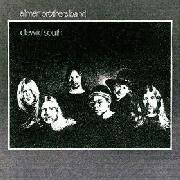
drumming of Trucks and Johanson. Their second album, 1970's Idlewild South, recorded at Capricorn's studios in Macon,GA,was produced by Tom
Dowd, who had previously recorded Cream. This was a magical combination -- Dowd was completely attuned tothegroup's sound and goals, and
Idlewild South broadened that sound, adding a softer acoustic texture to their music and introducing Bettsasa composer (including the original
studio version of "In Memory of Elizabeth Reed," an instrumental tribute to Miles Davis thatwouldbecome a highlight of their shows, in many
different forms, for the next 30 years). It also had a Gregg Allman number, "MidnightRider,"which became one of the band's more widely covered
originals and the composer's signature tune.
By this time, the band's concerts were becoming legendary for the extraordinarily complex yet coherent interplay between the twoguitaristsand
Gregg Allman's keyboards, sometimes in jams of 40 minutes or more to a single song without wasting a note. And unlike the artrockbands of the
era, they weren't interested in impressing anyone with how they played scales, how many different tunings they knew, orwhichclassical riffs they
could quote. Rather, the Allmans incorporated the techniques and structures of jazz and classical into their playing.InMarch of 1971, the band
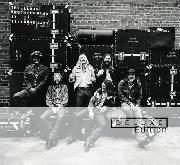
played a series of shows at the Fillmore East that were recorded for posterity and subsequently transformedintotheir third album, At Fillmore
East. This double LP, issued in July of 1971, became an instant classic, rivaling the previous blues-rocktouchstone cut at the Fillmore, Cream's
Wheels of Fire. Duane Allman and his band were suddenly the new heroes to millions of mostlyolderteenage fans. Although it never cracked the
Top Ten, At Fillmore East was certified as a gold record on October 15, 1971.
Duane Allman was killed in a motorcycle accident 14 days later. The band had been midway through work on its next album, Eat aPeach,which
they completed as a five-piece, with Dickey Betts playing all of the lead and slide guitar parts. Their second double album in arowbecame
another instant classic, and their first album to reach the Top Ten, peaking at number five.
Despite having completed Eat a Peach, the group was intact in name only. Rather than try to replace Duane Allman as a guitarist,theycontrived
to add a second solo instrument in the form of a piano, played by Chuck Leavell. The group had already begun work on a long-delayed follow-up
to Eat a Peach, when Oakley was killed in a motorcycle accident only a few blocks from Allman's accident site.
Lamar Williams (b. Jan. 15, 1949-d. Jan. 25, 1983) was recruited on bass, and the new lineup continued the group's concert activities, aswellas
eventually finishing the band's next album, Brothers and Sisters. which was released on August 1, 1973. During the extended gapinreleases
following Eat a Peach, Atco reissued The Allman Brothers Band and Idlewild South together as the double LP Beginnings,whichcharted higher than
either individual release.
Brothers and Sisters marked the beginning of a new era. The album had a more easygoing and freewheeling sound, less bluesy andmorecountry-
ish. This was partly a result of Capricorn losing the services of Tom Dowd, who had produced their three previousalbums.Additionally, Dickey
Betts' full emergence as a songwriter and singer as well as the group's only guitarist, playing all of the lead andslideparts, altered the balance of
the group's sound, pushing forth his distinct interest in country-rock. Betts also became the reluctant defactoleader of the band during this
period, not from a desire for control as much as because he was the only one with the comparativestabilityand creative input to take on the
responsibility.
The record occupied the number one spot for six weeks, spurred by the number two single "Ramblin' Man," and became their most well-known
album. It was an odd reversal of the usual order of success for a rock band -- usually, it was the release of an album that drewthecrowds to
concerts, but in this case, the months of touring the band had done paved the way for the album. The fact that it keptgettingpushed back only
heightened the fans' interest.
Ironically, Brothers and Sisters was a less challenging record than the group's earlier releases, with a relatively laid-back sound,relaxedcompared
to the groundbreaking work on the group's previous four albums. But all of this hardly mattered; based on the reputationthey'destablished with
their first four albums, and the crowd-pleasing nature of "Ramblin' Man" and the Dickey Betts-composedinstrumental"Jessica," the group was
playing larger halls and bigger crowds than ever.
An entire range of Southern rock acts had started to make serious inroads into the charts in the wake of the Allman Brothers. Labels suchasMCA
and even Island Records began looking for this same audience, signing acts like Lynyrd Skynyrd and Blackfoot, respectively,amongothers. For
the first time since the mid-'50s, the heyday of the rockabilly era, a major part of the country was listening to rock & rollwith adistinctly Southern
twang.
The band began showing cracks in 1974, as Gregg Allman and Dickey Betts both began solo careers, recording albums separately fromthegroup.
Allman married Cher (twice), an event that set him up in a Hollywood-based lifestyle that created a schism with the rest of theband.They might
have survived all of this, but for the increasing strain of the members' other personal habits -- drugs and alcohol hadalwaysbeen a significant
part of the lives of each of the members, except perhaps for Jaimoe, but as the strain and exhaustion of touringcontinued,coupled with the need
to produce new music, these indulgences began to get out of control, and Betts' leadership of the groupcreated afurther strain for him.
The band's difficulties were showcased by their next album, the highly uneven Win, Lose or Draw, which lacked the intensity and
sharpnessoftheir prior work. The whole band wasn't present for some of the album, and Gregg Allman's involvement with Cher, coupled with
hisseriousdrug problems, prevented him from participating with the rest of the group -- his vocals were added separately, on the other side
ofthecountry.
The band finally came apart in 1976 when Allman found himself in the midst of a federal drug case against a supplier and agreed totestifyagainst
a friend and band employee. Leavell, Johanson, and Williams split to form Sea Level, which became a moderately successfulband,cutting four
albums for Capricorn over the next four years, while Betts pursued a solo career. All of them vowed never to work withGreggAllman again.
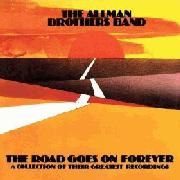
Amid this split, Capricorn Records, reaching ever deeper into its vaults for anything that could generate income, issued two collections,adouble-
LP live collection called Wipe the Windows, Check the Oil, Dollar Gas, showcasing the Brothers and Sisters-era band atvariousconcerts, and a
double-LP best-of package, And the Road Goes On Forever. Wipe the Windows was a modest seller, appearing as it didwhenthe group's sales had
already fallen off, and it was compared unfavorably with the legendary work on At Fillmore East. The studiocompilationpassed with barely a
ripple, however, because most fans already had the stuff on the original albums.
They were all back together by 1978, however, and over the next four years the group issued a somewhat uneven series ofalbums.Enlightened
Rogues (1979) somewhat redeemed their reputations -- produced by Tom Dowd, who had always managed to get thevery bestwork out of the
group, it had more energy than any record they'd issued in at least six years. It also restored the two-guitar lineup,courtesyof Dan Toler (from
Dickey Betts' solo band), who was brought in when Chuck Leavell (along with Lamar Williams) refused to returnto theAllmans. By that time,
however, the Allmans were fighting against time and musical trends. Disco, punk, and power pop had prettymuchstolen a march on the arena
acts epitomized by the Allmans; whatever interest they attracted was a matter of nostalgia for theirearlierreleases. The group was in danger of
becoming arena rock's third big oldies act (after the Moody Blues and Paul McCartney's Wings).
Additionally, their business affairs were in a shambles, owing to the bankruptcy of Capricorn Records in late 1979. When the fallout
fromtheCapricorn collapse settled, PolyGram Records, the company's biggest creditor, took over the label's library, and the Allman
Brotherswerecut loose from their contract.
Their signing to Arista enabled the group to resume recording. What they released, however, was safe, unambitious,
routinelycommercialpop/rock, closer in spirit to the Doobie Brothers than their own classic work, and a shadow of that work, without any of
theinvention anddaring upon which they'd built their reputations. The group's fortunes hit a further downturn when Jaimoe was fired, breaking
upone of thebest rhythm sections in rock. For most of the 1980s, the group was on hiatus, while the individual members sorted out theirpersonal
andprofessional situations. During those years, only Dickey Betts seemed to be in a position to do much with his music, and most ofthat
wasn'tselling.
In 1989, the band was reactivated again, partly owing to PolyGram's decision to issue the four-CD box set retrospective Dreams. Thatset,coupled
with the reissue of their entire Capricorn catalog on compact disc in the years leading up to the box's release, reminded millionsofolder listeners
of the band's greatness, and introduced the group to millions of people too young to have been around for Watkins Glen,muchless the Fillmore
shows.
They reunited and also restored the band's original double-lead-guitar configuration, adding Warren Haynes on lead guitar alongsideDickeyBetts,
with Allen Woody playing bass; Chuck Leavell was gone, however, having agreed to join the Rolling Stones on tour as theirresidentkeyboard
player, and Lamar Williams had succumbed to cancer in 1983.
The new lineup reinvigorated the band, which signed with Epic Records and surprised everyone with their first release, Seven Turns.
Issuedin1990, it got some of the best reviews and healthiest sales they'd had in more than a decade. Their subsequent studio albums failed
toattractas much enthusiasm, and two live albums, An Evening With the Allman Brothers Band and 2nd Set, released in 1992 and
1995,respectively,were steady but not massive sellers. Much of this isn't the fault of the material so much as a natural result of the passage
oftime, which hasleft the Allmans competing with two decades' worth of successors and rivals.
The group has stayed together since 1989, overcoming continuing health and drug problems, which have occasionally battered their effortsatnew
music. They remain a top concert attraction 25-plus years after their last historically important album, easily drawing more than20,000fans at a
time to outdoor venues, or booking 2,000-seat theaters for three weeks at a time. Their back catalog, especially the firstfivealbums, remain
consistent sellers on compact disc and recently returned to the reconstituted Capricorn label (still a home forSouthernrockers, including the
latter-day Lynyrd Skynyrd, as well as reissues of Elmore James and other classic bluesmen), under a 1997licensingagreement that has resulted
in their third round of digital remastering.
Apart from their Arista releases, the Allman Brothers Band has remained remarkably consistent, altering their music only gradually over30years.
They sound more country than they did in their early days, and they're a bit more varied in the vocal department, but they havestillbeen soaring
at their concerts and on most of their records over the last ten-plus years. « hide |
Similar Bands: The Derek Trucks Band, Widespread Panic, The Marshall Tucker Band, Gov't mule, Barefoot Jerry Contributors: BigDickBlaque, BigLeach65, DikkoZinner, Sirob, rockandmetaljunkie, Nagrarok, CrazyFool84, scheim, Skyler, masada, Nexion, HenchmanOfSanta, Med57, SandwichBubble, Wav0fmutilation, gocsa666, NordicMindset, BigLeach65, Nagrarok, rockandmetaljunkie, luvdrama,
|