|
04-26 Motley Crue returns
04-07 Mick Mars vs Motley Crue
03-22 Motley Crue Still Kickin
02-22 New Mötley Crüe Song (ft.MGK
» Edit Band Information
» Edit Albums
» Add a Review
» Add an Album
» Add News | Motley Crue
The sub-genre generally referred to as "hair metal" is as misleading as they come. Despite the great hair, the matter of
whether the majorityof the bands could be referred to as "metal" is debatable; that the genre descended into a soft-rock
self-parody is well-known, and it is this"album composed entirely of power ballads" approach which remainds the sustaining
image of what hair metal sounded like. Can images beheard? Anyway, the ühairü label was a manufactured one, a media
fabrication. So too was the image, but it was a self-fabrication. One of thebands that can be said to have fo ...read more
The sub-genre generally referred to as "hair metal" is as misleading as they come. Despite the great hair, the matter of
whether the majorityof the bands could be referred to as "metal" is debatable; that the genre descended into a soft-rock
self-parody is well-known, and it is this"album composed entirely of power ballads" approach which remainds the sustaining
image of what hair metal sounded like. Can images beheard? Anyway, the ühairü label was a manufactured one, a media
fabrication. So too was the image, but it was a self-fabrication. One of thebands that can be said to have founded the
genre, LA band Mötley Crüe, were never the most extravagantly dressed of the bands, but theyhelped pioneer the early 80s
glam look; the üstreet rat with makeupü look. For a while at least, Mötley Crüe were a unique band.
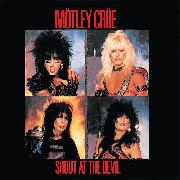
Their second major release, 1983's Shout At The Devil, brought the new music to the forefront of the mainstream with a loud
bang. It was aspure a heavy metal album as there is. Far from the self-indulgent mass produce which 80s heavy metal
became as the decade came to anend, Shout was a different album. It was shocking. Pentagrams and heavy metal go
together like parents' groups, rabid censorship and asurge in album sales and the vinyl release of Shout came emblazoned
with a pentagram visible only when held at a forty-five degree angle.The world would never be the same again.
The Crüe were by no means the cheesiest, the most outrageous, the poppiest or the most technically proficient of the ühairü
bands, but theywere the most influential of the bands (the genre crapped out in the mid-80's when they did and didn't
recover until it was too late). Theywere never a flashy band musically, unlike the majority of their peers. Simplicity was, and
still is, the defining characteristic of Mötley Crüe'smusic that separates them from their peers. Nikki Sixx and Tommy Lee
(often characterised as one of hard rock's best drummers - acontroversial point for most of his peers) combined to form a
crude but effective rhythm section, while guitarist Mick Mars filled the gaps,leading to a very minimalist approach, an
approach rarely taken by other bands of the time.
The story of Mötley Crüe as a band can be split into three distinct categories: the early, pre-mainstream period; the
substantial middleportion, the party years, during which the band saw most of their success through coke and heroin-tinted
glasses; and the strenuous latterera, during which the band fell hard from grace and was plagued by depatures and in-
fighting. Be warned, I have 25 years to cover, so detailmay be scant and uneven in places.
After leaving his band London (which would later feature Izzy Stradlin and Slash of Guns N' Roses and
Cinderella drummerFred Coury) early in 1981, Nikki Sixx (born Frank Ferrano) was introduced to 18-year old Tommy Lee.
It's uncertain at this stage whetherTommy was known exclusively for his penis size. Updates as they cum. They soon
recruited "loud, rude, aggressive guitarist" Mick Mars (ashe described himself in a classified) and a schoolmate of Tommy's,
Vince Neil, who took vocal duties.
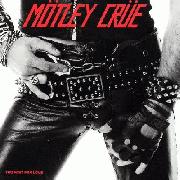
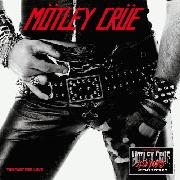
Success obviously followed, because in November of the same year the band pressed a limited run of 20,000 copies of their
debut albumToo Fast For Love on their own label, Leathür Records. The album cover featured Vinceüs leather-clad crotch,
much to the delight of make-up wearing boys everywhere, and probably less women. More important a detail is the speed at
which the album sold. Within 3 months, theband had sold all 20,000 copies, earning them a deal with Elektra Records. The
album was remixed, re-arranged and re-released in Augustof 1982.
Too Fast For Love is far disconnected from the typical Mötley Crüe image; it's raw and itüs tight, even sleazy, but it's closer
to HanoiRocks and The Raspberries than Van Halen. It's a short slice of poppy punk grandeur, combining strong
melodies with peppy guitarriffs and shouty choruses. The album sold well, but made little sustaining impact outside of
California.
Eager to capitalise on what little headway they had made, the band went back to the studio with producer Tom Werman to
produce a followup. The album saw the band take a major shift towards the heavy metal style of British bands [l]Iron
Maiden[/l], Judas Priest et al. Thefusion with glam's pop sensibilities made this form of heavy metal bearable to trained
ears, without going to OTT extremes of power metal.The result, Shout At The Devil was the breakthrough the band had been
searching for. With lyrical themes such as murdering rapists(Bastard), police brutality (Knock 'Em Dead Kid), blowjobs (10
Seconds To Love' yes, it's that subtle) and rioting in general (Red Hot,Danger), the album was downright edgy.
It was the singles which would prove most controversial, however. Anti-Satan song Shout At The Devil was denounced as
"satanic"; whilethe video for Looks That Kill oozed hellfire. Parents hated them; kids loved them; rock n' roll history in a
nutshell. A massively successfulfestival tour coincided with the album's release, elevating the band to heights hitherto
unknown for a heavy rock band. Mötley Crüe wereyoung, rich, famous and fabulous. The world was at their feet.Tragically,
on December 8th 1984, Vince Neil, drunk and speeding, crashed his car in the Malibu Beach area, killing Hanoi Rocks
drummerRazzle Dingley, his front-seat passenger.
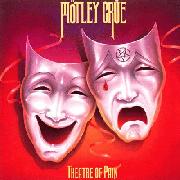
It's best not to mention Theatre of Pain, so I won't. Needless to say it contained the ultimate power ballad in Home Sweet
Home, but littleelse. Real Crüe fans prefer to pretend it doesn't exist, but curious record-buyers have often been fooled by its
apparent reality. Girls, Girls,Girls was an improvement, but not enough to warrant any serious analysis. The band's sound had
evolved (or devolved) from ballsy metal towhatever ToP was to the polished rockabilly glam that was GGG. Luckily, Tom
Werman was fired before any more damage could besustained.
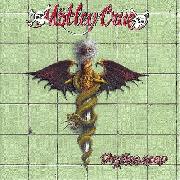
A period of collective rehab and the onset of Mick Mars' degenerative bone disorder preceded the recording of the band's fifth
studio album,Bob Rock-produced Dr. Feelgood. Everybody should have heard the title track, which exhibited a confident
swagger only sporadically seenon the previous efforts, and this album was certainly a return to form for a band in trouble.
They managed to extract 5 hit singles from thealbum, among which was some of the bandüs most enduring material.
Internal politics led to Vince Neil leaving to pursue a solo career in 1992. He was replaced by John Corabi, formerly of relative
unknownsThe Scream, and the band recorded their sixth, self-titled, album (known as MC94). The addition of Corabi as a
second guitarist opened uphitherto unexplored territories for the band and the end product saw a much heavier Crüe emerge,
suiting Corabi's more spirited vocal style.The album began well but ultimately fell short of being a hit. Nonetheless, the band
saw fit to continue with Corabi at the helm, and began towork on a new album, tentatively entitled "Personality #9". Midway
into the sessions, Corabi was dropped and Vince Neil was re-instated.The Crabby era had come to an end.
Working with Skinny Puppy producer Scott Humphries (not the jazz guy), the band continued the same sessions, now writing
material withNeil. As Mick Mars became increasingly marginalised, the project became dominated by Humphries, Nikki Sixx and
Tommy Lee, who used itas an outlet for their more experimental sides. The result was a progression from MC94, with heavy,
chugging riffs combined with industrialsounds and synthesised instruments as well as unconventional arrangements. The fans
hated it.
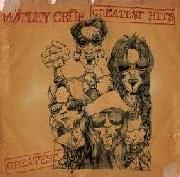
Two new songs on the Greatest Hits release constituted the last of Tommy Lee's contribution to the band before his
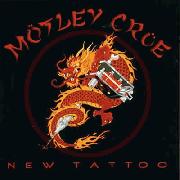
departure for, yeah, ahip-hop career. Randy Castillo took over as drummer for New Tattoo, a dullbutpleasant radio rock album
that never made it to radio,remaining as drummer until his death in 2002. Tommy rejoined the remaining three in 2004 and
recorded three new songs (one a RollingStones cover) for a new, expanded, comprehensive greatest hits package, Red,
White And Crüe.
The subsequent tour was the surprise hit of the year, demand outstripping supply to the point where dozens of additional
shows still leftmany disappointed. It finished one of 2005's highest grossing tours. The band plans to re-enter the studio in
May 2006 with producer BobRock with a view to an early 2007 release. Tommy Lee's involvement in CBS' Rock Star show and
supergroup Supernova with JasonNewsted (ex-Metallica) and Gilby Clarke (ex-Guns N' Roses) may conflict
however. « hide |
Similar Bands: Quiet Riot, Skid Row (US), Def Leppard, W.A.S.P., Twisted Sister Contributors: nylonhair, ladyevil, discovolante, CptWillard, facupm, AleksiS, Lordifani, TheRamblingElf, TheSpirit, demon of surveillance, jars80, muchtallerthanu, Erratic, Racinette, Alex101, Dave de Sylvia, KManoc1, ThomasTheCure, KILL, RunOfTheMill, rockandmetaljunkie, AleksiS, TheRamblingElf, Voivod, Dave de Sylvia,
|