|
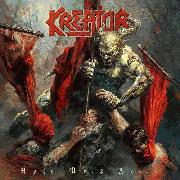
11-30 Kreator post new video 05-05 Kreator post new video 04-27 Kreator post new song 04-09 Kreator stream song sample 02-02 Kreator New Album Details
» Edit Band Information » Edit Albums
» Add a Review » Add an Album » Add MP3 » Add News | Kreator Thrash | Arguably the most influential and successful European thrash metal band ever, Germany's Kreator is also by far the most enduring. Like
many of their European speed metal brethren.Kreator fused Metallica's thrash innovations with Venom's proto-black metal imagery, sparked
it with Motörhead's balls-out velocity, and capped it off with the nihilistic outlook typical of heavy metal since the seminal days of Black
Sabbath. Kreator's career also mirrored speed metal's rising and waning fortunes: building from strength to strength throughout the 1980s,
only to fall on hard times in the 1990s. No ...read more
Arguably the most influential and successful European thrash metal band ever, Germany's Kreator is also by far the most enduring. Like
many of their European speed metal brethren.Kreator fused Metallica's thrash innovations with Venom's proto-black metal imagery, sparked
it with Motörhead's balls-out velocity, and capped it off with the nihilistic outlook typical of heavy metal since the seminal days of Black
Sabbath. Kreator's career also mirrored speed metal's rising and waning fortunes: building from strength to strength throughout the 1980s,
only to fall on hard times in the 1990s. Now seemingly reborn in their third decade of activity, Kreator are certified worldwide superstars who
still tour as widely and frequently as bands half their age -- now that's resilience.
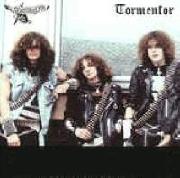
Originally named "Tyrant," and then "Tormentor," Kreator was founded in 1982 by vocalist/guitarist Mille Petrozza, bassist Rob Fioretti, and
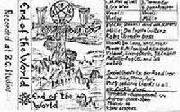
drummer Jürgen Reil (aka Ventor) in the industrial capital of Essen, Germany. They were still known as "Tormentor" when their first two
demo tapes, one fittingly named "Blitzkrieg" (1983), and the other "End of the World" (1984), fell into the hands of thousands of heavy
metal fans engaging in the era's bustling underground tape-trading network. Positive word of mouth soon attracted the attention of
Germany's own metal start-up, Noise Records, which signed the newly re-christened Kreator to a deal and immediately put them to work on
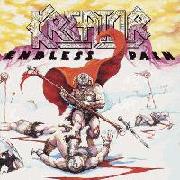
their first album. Recorded in just ten days at Berlin's Musiclab Studios, 1985's Endless Pain was a savage debut, but its crude thrashing
quickly had the underground metal world a-buzzing with excitement. A second guitar player, Wulf, was hired for touring purposes, and with
the group's reputation preceding them, lucky fans within the band's modest touring radius were soon clamoring for tickets.
No sooner had they come off the road, then Kreator were heading right back to Musiclab Studios, this time with producer Harris Johns
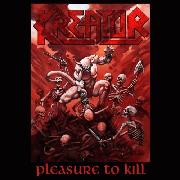
(Helloween, Voivod) to record their second album, Pleasure to Kill. Unleashed in 1986 and still considered the band's first 'classic' album,
Pleasure to Kill raised the bar with more diversity of tempos and greater attention to technical execution, while losing nothing in terms of
ferocity or speed. The band closed out the year with the Flag of Hate E.P. (named after a re-recorded version of their earliest hit), and there
seemed to be little doubt that Kreator, along with fellow Germans Helloween and Switzerland's Celtic Frost (with whom they toured the U.K. a
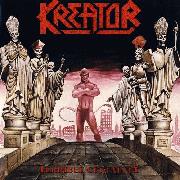
year later), were fast becoming Europe's top extreme metal contenders. Recorded at Hanover's Horus Studios with English producer Roy
Rowland, 1987's Terrible Certainty did nothing to dent this perception, since, for once, Petrozza and co. actually had a little time to work out
the songs beforehand. The ensuing tour further established their reputation as dedicated road warriors, and saw Kreator beefed up to a
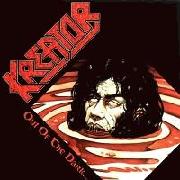
quartet once again with the addition of guitarist Jörge Trebziatowski. Profits from these concerts would help finance yet another E.P.
(product being something Noise never stopped asking for) entitled Out of the Dark, Into the Light, released in August 1988.
By this time, all signs suggested that Kreator were on the verge of a major breakthrough, and when Noise struck a deal with giant Epic
Records for large-scale distribution in America, Petrozza knew this was his chance of taking his band global. Mustering all of his creative
juices and honing his songwriting, he led Kreator into Los Angeles' Music Grinder Studios and brought in well-regarded producer Randy
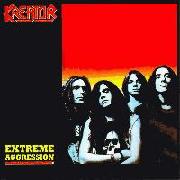
Burns (Megadeth, Nuclear Assault, etc.) to guide them to another thrash metal landmark with 1989's Extreme Aggression. With videos
made for the ubiquitous title track and the venomous "Betrayer" getting plenty of exposure on MTV's Headbanger's Ball, Extreme
Aggression quickly became their biggest seller yet, and the subsequent North American swing with Suicidal Tendencies introduced the band
to many new friends. The tour also marked the debut of former Sodom guitarist Frank "Blackfire" Gosdzik, whose nightly lead guitar duels
with Petrozza are still the stuff of fond memory for Kreator fans. Seeking to capitalize on the group's momentum, Noise rushed them back
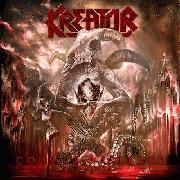
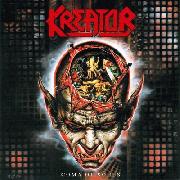
into the studio to whip up next effort, Coma of Souls, released in October 1990. Unfortunately, the hastily conceived L.P. clearly suffered
from the less than favorable circumstances in which it was created, seeming too much like a retread of earlier material and bogged down by
filler. It should also be noted that, by the end of the 1980s, thrash and speed metal had largely run their course and mutated into death
metal, leaving genre standard-bearers like Kreator, Anthrax, and even Metallica, with a difficult choice: evolve or perish.
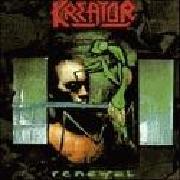
1992's appropriately named Renewal seemed to answer that question by going straight to the source for help. Kreator sought out renowned
producer Tom Morris (Sepultura, Morbid Angel, etc.) at his Morrissound Studios in Tampa to help them delve deeper into the death metal
template. (One thing that needed no updating was Petrozza's hissing, scratchy voice, which of course predated, and no doubt influenced,
death metal's Cookie Monster vocal style.) Proving just how wary (perhaps too wary) the studio was of current trends, Renewal also came
slathered in industrial-metal techniques -- something that did not go over well with Kreator and was later blamed for the album's
disappointing showing. The excruciatingly taxing touring commitments that followed took the band as far as South America, but
understandably left them physically and creatively exhausted, prompting Petrozza to announce a protracted break to recover. Incredibly,
Kreator's silence was only broken three years later with the release of 1995's, somewhat back to basics, Cause for Conflict -- their first
effort for new label GUN Records. Hardly a successful comeback, the album found Kreator confused and uninspired -- hopelessly out of
touch with the day's reigning extreme metal trends, and surely traumatized by the recent departure of both Fioretti and Ventor (they were
replaced by bassist Christian Giesler and former Whiplash drummer Joe Cangelosi). Adding insult to injury, Noise Records chose exactly
this difficult moment to release the Scenarios of Violence set -- a collection of live recordings and remixed old hits that seemed to declare
Kreator's future prospects null and void.
Looking to remedy the band's tenuous situation, Petrozza called upon former Coroner guitar wizard Tommy Vetterli to help him guide Kreator
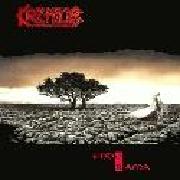
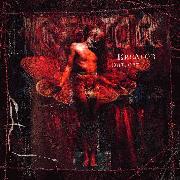
into realms unknown, getting even further away from their roots on their next two albums, the highly experimental Outcast (1997) and
Endorama (1999). Both of these veered into ever-slower pacing, added gothic and ambient elements, incorporated samples and loops, and
even found Petrozza trying a few different singing styles on for size. But even though they met with certain critical acclaim and signaled
Ventor's welcome return to Kreator's ranks, neither of these albums managed to re-ignite the band's career. Yet again, timely retrospective
releases like 1999's Voices of Transgression (shedding light on the band's hit-and-miss second decade) and 2000's Past Life Trauma (a
near-flawless wrap-up of their first decade) provided some consolation for disgruntled old fans who had long abandoned Kreator's floundering
ship; but, unexpectedly, they also cleared the way for a rebirth of sorts.
This renaissance began to take shape following Vetterli's departure and the signing of a new record deal with Germany's SPV label. Simply
put, Petrozza recommitted himself to thrash, and, after hiring Finnish-born second guitarist Sami Yli-Sirnio, proceeded to write Kreator's
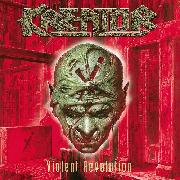
strongest album in years, with 2001's positively stunning Violent Revolution. In keeping with Kreator tradition, the consequent world tour
became their most comprehensive and extensive ever. Thanks to Violent Revolution's great success, it served to reintroduce and
reestablish Kreator as one of the world's premiere speed metal acts -- a feat that was commemorated with the group's first live album -- a
lavish two-CD/DVD set appositely named (with some grammatical license) Live Kreation/Revisioned Glory -- a couple of years later. The
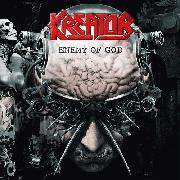
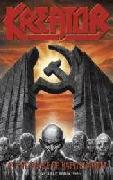
band returned in 2005 with the similarly-themed Enemy of God, followed by At the Pulse of Kapitulation: Live in East Berlin, 1990 in 2008
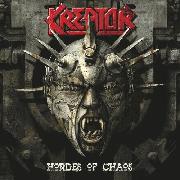
and the reliably thrash-heavy Hordes of Chaos in 2009. « hide |
Similar Bands: Demolition Hammer, Destruction, Slayer, Sodom, Testament
Contributors: Hawks, rockandmetaljunkie, SylentEcho, HenchmanOfSanta, Mikesn, FR33L0RD, Alex101, Shadows, Apocalyptic Raids, Confessed2005, rockandmetaljunkie, Insurrection, KILL, Voivod, BornDeadBuriedAlive, LepreCon, Mikesn,
|