John Williams
John Williams is an American film composer, conductor and pianist well known as being one of the most prolific and recognisable composers having worked on numerous large scale Hollywood films, in particular those by George Lucas and Steven Spielberg. Most notably Williams has been responsible for scoring the complete Star Wars saga, the four Indiana Jones films, Jurassic Park, Schindler's List, E.T., Jaws, Close Encounters of a Third Kind and three Harry Potter films. His style's distinction is known for using traditional orchestral arrangements that often incorporate majestic, far reaching ...read more
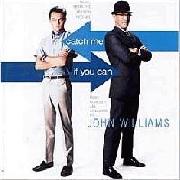
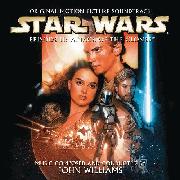
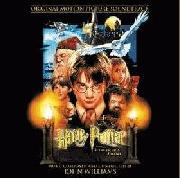
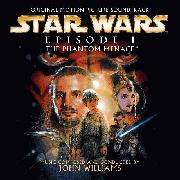
John Williams is an American film composer, conductor and pianist well known as being one of the most prolific and recognisable composers having worked on numerous large scale Hollywood films, in particular those by George Lucas and Steven Spielberg. Most notably Williams has been responsible for scoring the complete Star Wars saga, the four Indiana Jones films, Jurassic Park, Schindler's List, E.T., Jaws, Close Encounters of a Third Kind and three Harry Potter films. His style's distinction is known for using traditional orchestral arrangements that often incorporate majestic, far reaching motifs. His melodic lines while simple, are often extremely recognisable and commonly utilise the concept of character leitmotif, a form largely developed by Richard Wagner.Not only has Williams generated a vast amount of film music, he also has written many concerti for various instruments, a symphony, music for the 1984, 1988 and 1996 Summer Olympics as well as television themes for NBC’s Nightly News, The Today Show and Meet the Press.Williams resided in Los Angeles during much of his early life and went on to study privately with Italian composer Mario Castelnuovo-Tedesco at UCLA. During 1952, he was drafted into the U.S. Air Force where his conducting career developed as he began conducting the Air Force Band as part of his assignments. After his service, Williams relocated to New York where studied piano under Rosina Lhévinne, complemented by his employment as a jazz pianist at various clubs and studios. His efforts landed him roles back in Los Angeles working for Henry Mancini as a session musician alongside other members where he recorded on Mancini's Peter Gunn (1959), Days of Wine and Roses (1962) and Charade (1963).Having not only worked with Mancini, Williams also recorded with other well known composers such as Jerry Goldsmith and Emler Bernstein which inevitably led him towards more serious roles in his scoring career. His first major success was with Fiddler on the Roof (1971), for which he won his first Academy Award. Following this, he went onto score a trio of ‘70s disaster films including The Towering Inferno (1974) gradually earning successive nominations along the way. Around the same time Steven Spielberg, then still in his directorial infancy was keen on having Williams score his debut film The Sugarland Express (1974). The relationship followed with Jaws in the following year which solidified the now famous Spielberg-Williams collaboration that exists to the present day; Williams has since scored all but two of Spielberg’s films to date.On the success of Jaws, Williams scored Spielberg's next feature, Close Encounters of a Third Kind (1977). The film is noted for its classic 5 note communication theme. Coupled with Jaws' E to F theme, these two earlier scores are classic examples of William's concept of leitmotif to introduce and maintain character direction.Perhaps his most well known music came soon after through the eyes of George Lucas and his space epic Star Wars IV: A New Hope (1977), which in 2005 AFI named as their number one film score as part of their “100 Years of Film Scores” and also won him his second Academy Award. The Star Wars collaboration continued during the initially trilogy through into the 1980s, and again during the more modern prequel trilogy, with Williams developing new music for each successive film.From 1980 to 1993 he was principle conductor for the Boston Pops Orchestra (and continues to this day on occasion), whilst also scoring for major films such as E.T. the Extra-Terrestrial (1982) (third Oscar win) and the first three Indiana Jones instalments, Raiders of the Lost Ark (1981), The Temple of Doom (1984) and The Last Crusade (1989). The time between 1977 and 1989 is considered to be his most successful period both critically and commercially.Williams again joined Spielberg to score two 1993 films: Jurassic Park and Schindler’s List. The score for the latter is sparse compared to his previous grandiose orchestral arrangements; much of the music focuses on the soloist (notably himself on the piano, Giora Feidman on clarinet and Itzhak Perlman on violin) and uses moving minor melodies to convey poignancy. The score earned Williams his fourth Academy Award. The 1990s however as a whole saw less notable scores from Williams; aside from those aforementioned, Home Alone (1990), Home Alone 2: Lost in New York (1992)[/L] and Saving Private Ryan (1999) were well received critically, however not as commercially successful, that is until the reformation of the Star Wars franchise, and later on into the 2000s a newly developed high fantasy series, Harry Potter, which has an iconic minor mode theme that was subsequently used on the three most recent films which Williams was not present on.Spielberg’s interest in historical dramas throughout the 2000s generated curious scores from Williams. Catch Me if You Can (2002) and The Terminal (2005) saw more tongue in cheek designs while Memoirs of a Geisha (2005) and Munich (2005) proved to be more sombre works reflective of their respective subjects. He is expected to follow up 2008’s Indiana Jones: The Kingdom of the Crystal Skull with scores for the Spielberg’s new Tintin trilogy and War Horse, both beginning in 2011. « hide |