» Edit Band Information
» Edit Albums
» Add a Review
» Add an Album
» Add News | Jimmy Page
Unquestionably one of the all-time most influential, important, and versatile guitarists and songwriters in rock history is Jimmy Page. Justabout every rock guitarist from the late '60s/early '70s to the present day has been influenced by Page's work with Led Zeppelin -- hismonolithic riffs served as a blueprint for what would eventually become heavy metal, yet he refused to be pigeonholed to any single musicalstyle (touching upon folk, country, funk, blues, and other genres). Page also lent a hand in writing (or co-writing) Zeppelin's vast array ofclassic songs and produced all their albums. ...read more
Unquestionably one of the all-time most influential, important, and versatile guitarists and songwriters in rock history is Jimmy Page. Justabout every rock guitarist from the late '60s/early '70s to the present day has been influenced by Page's work with Led Zeppelin -- hismonolithic riffs served as a blueprint for what would eventually become heavy metal, yet he refused to be pigeonholed to any single musicalstyle (touching upon folk, country, funk, blues, and other genres). Page also lent a hand in writing (or co-writing) Zeppelin's vast array ofclassic songs and produced all their albums. Born on January 9, 1944, in Heston, Middlesex, England, Page picked up the guitar at age 13after being inspired by the Elvis Presley tune "Baby Let's Play House," and while he took several lessons, was mostly self-taught. Insteadof attending college right after high school, Page decided to join his first real rock band, Neil Christian & the Crusaders, whom he touredEngland with. But Page fell seriously ill (with glandular fever) and was forced to quit and recuperate. Dejected, Page pondered giving upmusic and focusing on another interest, painting, as he enrolled at an art college in Sutton, Surrey.
With the emergence of such bands as the Rolling Stones in the early '60s and their gritty blues-rock, Page's interest in music perked uponce again -- but instead of forming a band right away, he decided to hone his craft by becoming one of England's top session guitarists andproducers. Although the exact specifics of which sessions he was involved with have become hazy over time, it's confirmed that he workedwith many of the day's top acts, including the Who, Them, Donovan, the Kinks, and the Rolling Stones, among others. By 1966, Page waslooking to put his session work on hold and join a full-time band; he accepted an offer to play with the Yardbirds (initially as a bassist, thenshortly thereafter as a guitarist), as he was paired up with another one of rock's all-time guitar greats, Jeff Beck. Although the Yardbirdsbegan as a straight-ahead blues-rock band, with the inclusion of Page in the lineup, the group began experimenting with psychedelic andhard rock styles.
Despite it being obvious that the Yardbirds were on the downside of their career (Beck left shortly after Page came onboard), Page appearedon the album Little Games and several tours before the band finally called it a day in 1968. With a string of tour dates still set up throughoutEurope, Page decided to go through with the shows and put together a new band who was dubbed the New Yardbirds -- including longtimesession bassist John Paul Jones, plus newcomers Robert Plant on vocals and John Bonham on drums. After the completion of their initialtour, the band changed their name to Led Zeppelin and explored the still largely uncharted territory of hard rock/heavy metal. The bandimmediately became one of rock's most successful and enduring bands, issuing a string of classic albums from 1969 through 1975 -- LedZeppelin I, Led Zeppelin II, Led Zeppelin III, Led Zeppelin IV, Houses of the Holy, and Physical Graffiti -- which spawned such classic rockradio standards as "Dazed and Confused," "Whole Lotta Love," "Immigrant Song," "Black Dog," "Stairway to Heaven," and "Kashmir," asthe band also became a must-see live act in the process. Page also found the time to work with folk artist Roy Harper (most notably his1971 release, Stormcock, under the alias S. Flavius Mercurius). Zeppelin was arguably the biggest rock band in the world by the mid-'70s(their influence on other rock bands following in their wake cannot be stressed enough) as they launched their own record company, SwanSong, but it was around this time that Page began dabbling with heroin and other substances, eventually leading to him becoming a full-blown addict by the late '70s/early '80s (as a result, his playing began to suffer). Also, Page's interest in the occult became a concern tothose around him (he went as far as purchasing a mansion on the Loch Ness in Scotland that was once owned by renowned Satanist AleisterCrowley).
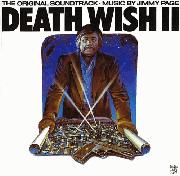
Zeppelin continued issuing albums until the dawn of the '80s (1976's concert movie/soundtrack The Song Remains the Same and Presence,1979's In Through the Out Door), but tragedy ultimately derailed the quartet -- the death of Plant's young son in 1977 and Bonham'salcohol-related death in 1980. After Led Zeppelin decided to call it quits in late 1980, Page disappeared from sight (it became known lateron that he hardly touched his instrument for a long time afterward). It wasn't until 1982 that Page began to emerge from his self-imposedexile, as he composed and played on the motion picture soundtracks to Death Wish I and Death Wish II, compiled the Zeppelin outtakescollection, Coda, and took part in the 1983 star-studded A.R.M.S. tour, which saw Page unite with Beck and Eric Clapton for a series ofshows that raised money for multiple sclerosis research. In 1984, Page guested alongside Plant, Beck, and Nile Rodgers on the hit EP ofrock & roll oldies The Honeydrippers, and formed his first band since the demise of Zeppelin, dubbed the Firm. The group featured formerFree/Bad Company vocalist Paul Rodgers, and despite the fact that their self-titled debut was a sizeable hit, the band decided to call it a dayshortly after the release of their lukewarm-received sophomore effort, Mean Business.
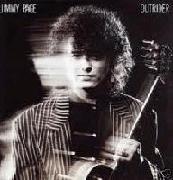
Zeppelin fans were given a rare treat when their surviving three members reunited (with drummers Tony Thompson and Phil Collins) for themammoth Live Aid at Philadelphia's JFK Stadium in July 1985 -- unfortunately handing in an incredibly under-rehearsed, sloppyperformance. Zeppelin reunited again in 1988 for the Atlantic Records 25th Anniversary Concert at New York's Madison Square Garden(this time Bonham's son, Jason, filled in for his late father behind the kit), and yet again performed another mistake-filled mini set. The sameyear Page guested on Plant's solo release, Now & Zen, as well as issuing his first ever solo recording, Outrider, following it up with a tourthat touched upon tracks from all eras of his career. By the early '90s, further rumors of an impending Zeppelin reunion continued tocirculate, and after Plant declined an invitation from Page to join forces once again, Page decided to collaborate with former DeepPurple/Whitesnake vocalist David Coverdale, whose vocal style has often been compared to Plant's over the years. Page's latest projectonly lasted a single album, 1993's heavily Zep-like Coverdale/Page, as a proposed world tour was scrapped in favor of just a few selectdates in Japan.
In 1994, Plant and Page finally agreed to collaborate once again (although Jones wasn't invited this time), leading to the release of theacoustic set No Quarter the same year, plus a highly popular MTV Unplugged special and sold-out world tour. A year later, Led Zeppelinwas inducted into the Rock & Roll Hall of Fame, this being the second time a Page-related band got the nod from the Hall (in 1992, theYardbirds were honored). 1998 saw Plant and Page issue an album of all-new material, Walking into Clarksdale, which was surprisingly notwell received by the public, sinking from sight shortly after its release. The duo went their separate ways by the late '90s, as Page joined theBlack Crowes for a tour and live album (2000's Live at the Greek). The same year as the album's release, another Crowes/Page tour wascut short due to a back injury Page suffered. But in June of 2001, Page took to the concert stage alongside Plant to celebrate the 60thbirthday of their friend, folk artist Roy Harper. « hide |
Similar Bands: Led Zeppelin, Robert Plant, Jeff Beck, Humble Pie Contributors: Chrysalis76, rockandmetaljunkie, spamming4life,
|