|
05-15 B.B. King Dead
» Edit Band Information
» Edit Albums
» Add a Review
» Add an Album
» Add News | B.B. King
Universally hailed as the king of the blues, the legendary B.B. King was without a doubt the single most important electric guitarist of
thelasthalfof the 20th century. His bent notes and staccato picking style influenced legions of contemporary bluesmen, while his gritty
andconfidentvoice --capable of wringing every nuance from any lyric -- provided a worthy match for his passionate playing. Between 1951
and1985, Kingnotched animpressive 74 entries on Billboard's R&B charts, and he was one of the few full-fledged blues artists to score a majorpop
hit when his1970 smash"The Thrill Is G ...read more
Universally hailed as the king of the blues, the legendary B.B. King was without a doubt the single most important electric guitarist of
thelasthalfof the 20th century. His bent notes and staccato picking style influenced legions of contemporary bluesmen, while his gritty
andconfidentvoice --capable of wringing every nuance from any lyric -- provided a worthy match for his passionate playing. Between 1951
and1985, Kingnotched animpressive 74 entries on Billboard's R&B charts, and he was one of the few full-fledged blues artists to score a majorpop
hit when his1970 smash"The Thrill Is Gone" crossed over to mainstream success (engendering memorable appearances on The EdSullivan Show
andAmericanBandstand). After his hit-making days, he partnered with such musicians as Eric Clapton and U2 and managed hisown acclaimed
solocareer, allthe while maintaining his immediately recognizable style on the electric guitar.
The seeds of Riley B. King's enduring talent were sown deep in the blues-rich Mississippi Delta, where he was born in 1925 near the
townofIttaBena. He was shuttled between his mother's home and his grandmother's residence as a child, his father having left the family
whenKingwasvery young. The youth put in long days working as a sharecropper and devoutly sang the Lord's praises at church before
movingtoIndianola --another town located in the heart of the Delta -- in 1943.
Country and gospel music left an indelible impression on King's musical mindset as he matured, along with the styles of blues greats (T-
BoneWalker and Lonnie Johnson) and jazz geniuses (Charlie Christian and Django Reinhardt). In 1946, he set off for Memphis to look uphiscousin,
arough-edged country blues guitarist named Bukka White. For ten invaluable months, White taught his eager young relative thefinerpoints
ofplaying blues guitar. After returning briefly to Indianola and the sharecropper's eternal struggle with his wife Martha, King returnedtoMemphis
inlate 1948. This time, he stuck around for a while.
King was soon broadcasting his music live via Memphis radio station WDIA, a frequency that had only recently switched to a pioneering all-
blackformat. Local club owners preferred that their attractions also held down radio gigs so they could plug their nightly appearances on
theair.WhenWDIA DJ Maurice "Hot Rod" Hulbert exited his air shift, King took over his record-spinning duties. At first tagged "The Peptikon Boy"
(analcohol-loaded elixir that rivaled Hadacol) when WDIA put him on the air, King's on-air handle became "The Beale Street Blues
Boy,"latershortened toBlues Boy and then a far snappier B.B.
King had a four-star breakthrough year in 1949. He cut his first four tracks for Jim Bulleit's Bullet Records (including a numberentitled"MissMartha
King" after his wife), then signed a contract with the Bihari Brothers' Los Angeles-based RPM Records. King cut a plethoraofsides inMemphis over
the next couple of years for RPM, many of them produced by a relative newcomer named Sam Phillips (whoseSunRecords wasstill a distant
dream at that point in time). Phillips was independently producing sides for both the Biharis and Chess; hisstablealso includedHowlin' Wolf, Rosco
Gordon, and fellow WDIA personality Rufus Thomas.
The Biharis also recorded some of King's early output themselves, erecting portable recording equipment wherever they could
locateasuitablefacility. King's first national R&B chart-topper in 1951, "Three O'Clock Blues" (previously waxed by Lowell Fulson), was cut at
aMemphisYMCA.King's Memphis running partners included vocalist Bobby Bland, drummer Earl Forest, and ballad-singing pianist Johnny
Ace.When King hittheroad to promote "Three O'Clock Blues," he handed the group, known as the Beale Streeters, over to Ace.
It was during this era that King first named his beloved guitar "Lucille." Seems that while he was playing a joint in a little
ArkansastowncalledTwist, fisticuffs broke out between two jealous suitors over a lady. The brawlers knocked over a kerosene-filled garbage pail
thatwasheatingthe place, setting the room ablaze. In the frantic scramble to escape the flames, King left his guitar inside. He foolishly ran back
intoretrieve it,dodging the flames and almost losing his life. When the smoke had cleared, King learned that the lady who had inspired
suchviolentpassion wasnamed Lucille. Plenty of Lucilles have passed through his hands since; Gibson has even marketed a B.B.-approved
guitarmodel underthe name.
The 1950s saw King establish himself as a perennially formidable hitmaking force in the R&B field. Recording mostly in L.A. (the
WDIAairshiftbecame impossible to maintain by 1953 due to King's endless touring) for RPM and its successor Kent, King scored 20 chart
itemsduringthatmusically tumultuous decade, including such memorable efforts as "You Know I Love You" (1952); "Woke Up This Morning"
and"PleaseLove Me"(1953); "When My Heart Beats like a Hammer," "Whole Lotta' Love," and "You Upset Me Baby" (1954); "Every Day I Have
theBlues"(anotherFulson remake), the dreamy blues ballad "Sneakin' Around," and "Ten Long Years" (1955); "Bad Luck," "Sweet Little Angel,"
andaPlatters-like"On My Word of Honor" (1956); and "Please Accept My Love" (first cut by Jimmy Wilson) in 1958. King's guitar attack
grewmoreaggressive andpointed as the decade progressed, influencing a legion of up-and-coming axemen across the nation.
In 1960, King's impassioned two-sided revival of Joe Turner's "Sweet Sixteen" became another mammoth seller, and his "Got a Right
toLoveMyBaby" and "Partin' Time" weren't far behind. But Kent couldn't hang onto a star like King forever (and he may have been tired
ofwatchinghisnew LPs consigned directly into the 99-cent bins on the Biharis' cheapo Crown logo). King moved over to ABC-Paramount
Recordsin1962,following the lead of Lloyd Price, Ray Charles, and before long, Fats Domino.
In November of 1964, the guitarist cut his seminal Live at the Regal album at the fabled Chicago theater and excitement virtually leaped
outofthegrooves. That same year, he enjoyed a minor hit with "How Blue Can You Get," one of his many signature tunes. "Don't Answer theDoor"
in1966and "Paying the Cost to Be the Boss" two years later were Top Ten R&B entries, and the socially charged and funk-tinged "Why ISing
theBlues"just missed achieving the same status in 1969.
Across-the-board stardom finally arrived in 1969 for the deserving guitarist, when he crashed the mainstream consciousness in a big
waywithastately, violin-drenched minor-key treatment of Roy Hawkins' "The Thrill Is Gone" that was quite a departure from the concise horn-
poweredbacking King had customarily employed. At last, pop audiences were convinced that they should get to know King better: not
onlywasthe tracka number-three R&B smash, it vaulted to the upper reaches of the pop lists as well.
King was one of a precious few bluesmen to score hits consistently during the 1970s, and for good reason: he wasn't afraid to
experimentwiththeidiom. In 1973, he ventured to Philadelphia to record a pair of huge sellers, "To Know You Is to Love You" and "I Like to Live
theLove," withthesame silky rhythm section that powered the hits of the Spinners and the O'Jays. In 1976, he teamed up with his old
cohortBland to waxsomewell-received duets. And in 1978, he joined forces with the jazzy Crusaders to make the gloriously funky "Never
MakeYour Move TooSoon" and aninspiring "When It All Comes Down." Occasionally, the daring deviations veered off-course; Love Me Tender,
analbum thatattempted to harnessthe Nashville country sound, was an artistic disaster.
Although his concerts were consistently as satisfying as anyone in the field (King asserted himself as a road warrior of
remarkableresiliencywhogigged an average of 300 nights a year), King tempered his studio activities somewhat. Nevertheless, his 1993 MCA disc
BluesSummitwas areturn to form, as King duetted with his peers (John Lee Hooker, Etta James, Fulson, Koko Taylor) on a program of
standards.Othernotablereleases from that period include 1999's Let the Good Times Roll: The Music of Louis Jordan and 2000's Riding with the
King,acollaboration withEric Clapton. King celebrated his 80th birthday in 2005 with the star-studded album 80, which featured guest spots
fromsuchvaried artists asGloria Estefan, John Mayer, and Van Morrison. Live was issued in 2008; that same year, King released an engagingreturn
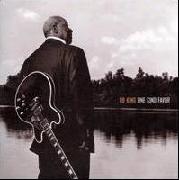
to pureblues, One KindFavor, which eschewed the slick sounds of his 21st century work for a stripped-back approach. A long overduecareer-
spanningbox set of King'sover 60 years of touring, recording, and performing, Ladies and Gentlemen...Mr. B.B. King, appeared in2012. Late in
2014, Kingwas forced tocancel several shows due to exhaustion; he was later hospitalized twice and entered hospice care in thespring. He died
in LasVegas, Nevada,on May 14, 2015. « hide |
Similar Bands: Albert King, Buddy Guy, Freddie King, T-Bone Walker, Muddy Waters Contributors: brochenski, Zig, DikkoZinner, rockandmetaljunkie, rattlehead42147, Shadows, Nexion, mdixon335, doctorjimmy, rockandmetaljunkie, Mad., Havey, manosg,
|