|
08-15 Matt Stone joins Rush on stage
01-13 Alex Lifeson is still alive!
01-10 Neil Peart Passes Away
12-07 Rush drummer retires
01-22 Rush announce R40 Tour (update
» Edit Band Information
» Edit Albums
» Add a Review
» Add an Album
» Add News | Rush
Over the course of their decades-spanning career, Canadian power trio Rush emerged as one of hard rock's most highly regarded bands; although typically brushed aside by critics and rarely the recipients of mainstream pop radio airplay, Rush nonetheless won an impressive and devoted fan base following while their virtuoso performance skills solidified their standing as musicians' musicians.Rush formed in Toronto, Ontario in the autumn of 1968, initially comprised of guitarist Alex Lifeson (born Alexander Zivojinovich), vocalist/bassist Geddy Lee (born Gary Lee Weinrib), and drummer John Rutsey. ...read more
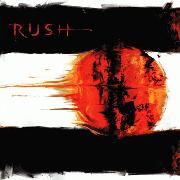
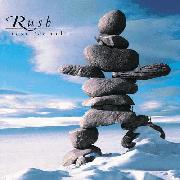
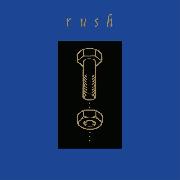
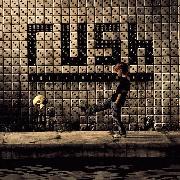
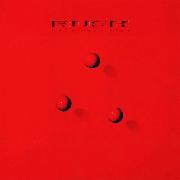
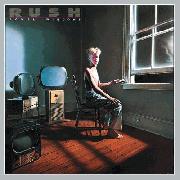
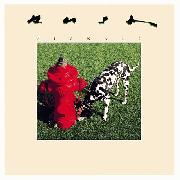
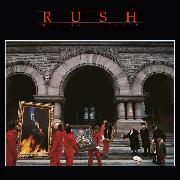
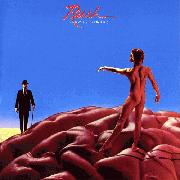
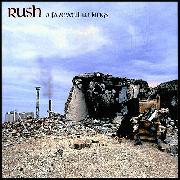
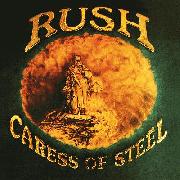
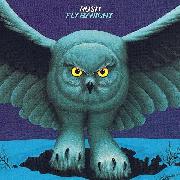
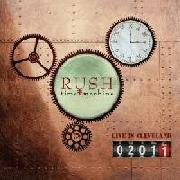
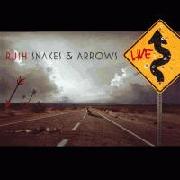
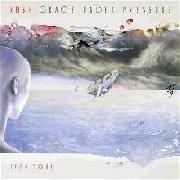
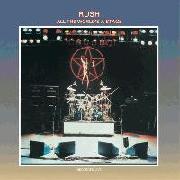
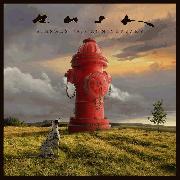
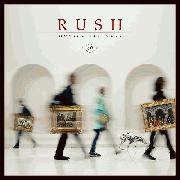
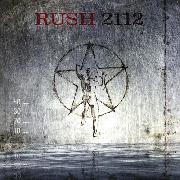
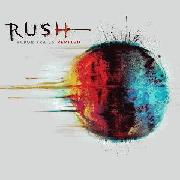
Over the course of their decades-spanning career, Canadian power trio Rush emerged as one of hard rock's most highly regarded bands; although typically brushed aside by critics and rarely the recipients of mainstream pop radio airplay, Rush nonetheless won an impressive and devoted fan base following while their virtuoso performance skills solidified their standing as musicians' musicians.Rush formed in Toronto, Ontario in the autumn of 1968, initially comprised of guitarist Alex Lifeson (born Alexander Zivojinovich), vocalist/bassist Geddy Lee (born Gary Lee Weinrib), and drummer John Rutsey. In their primary incarnation, Rush drew a heavy influence from Cream, and honed their skills on the Toronto club circuit before issuing their debut single, a rendition of Buddy Holly's "Not Fade Away," in 1973. A self-titled LP followed in 1974, at which time Rutsey exited; he was replaced by drummer Neil Peart, who also assumed the role of the band's primary songwriter, composing the cerebral lyrics (influenced by works of science fiction and fantasy) that gradually became a hallmark of the group's aesthetic.With Peart firmly ensconced, the band returned in 1975 with a pair of LPs, Fly by Night and Caress of Steel. Their next effort, 1976's 2112, proved their breakthrough release: a futuristic concept album based on the writings of Ayn Rand, it fused the elements of the trio's sound -- Lee's high-pitched vocals, Peart's epic drumming, and Lifeson's complex guitar work -- into a unified whole. Fans loved it -- 2112 was the first in a long line of gold and platinum releases -- while critics dismissed it as overblown and pretentious; either way, it established a formula from which the band rarely deviated throughout the duration of its career.A Farewell to Kings followed in 1977 and reached the Top 40 in both the U.S. and Britain. After 1978's Hemispheres, Rush achieved even greater popularity with 1980's Permanent Waves, a record marked by the group's dramatic shift into shorter, less sprawling compositions; the single "The Spirit of Radio" even became a major hit. With 1981's Moving Pictures, they scored another hit of sorts with "Tom Sawyer,"which garnered heavy exposure on album-oriented radio and became perhaps the trio's best-known song. As the 1980s continued, Rush grew into a phenomenally popular live draw as albums like 1982's Signals (which generated the smash "New World Man"), 1984's Grace Under Pressure, and 1985's Power Windows continued to sell millions of copies.As the decade drew to a close, the trio cut back on its touring schedule while hardcore followers complained of a sameness afflicting slicker, synth-driven efforts like 1987's Hold Your Fire and 1989's Presto. At the dawn of the '90s, however, Rush returned to the heavier sound of their early records and placed a renewed emphasis on Lifeson's guitar heroics; consequently, both 1991's Roll the Bones and 1993's Counterparts reached the Top Three on the U.S. album charts. In 1996, the band issued Test for Echo and headed out on the road the following summer. Shortly thereafter, Peart lost his daughter in an automobile accident. Tragedy struck again in 1998 when Peart's wife succumbed to cancer.Dire times in the Rush camp did not cause the band to quit. Lee took time out for a solo stint with 2000's My Favorite Headache; however, rumors of the band playing in the studio began to circulate. It would be five years until anything surfaced from the band. Fans were reassured in early 2002 by news that Rush were recording new songs in Toronto. The fruit of those sessions led to the release of Rush's 17th studio album, Vapor Trails, later that spring. By the end of the year a concert from the supporting tour, Rush in Rio, was released on DVD.In 2004 Rush embarked on their 30th anniversary tour, documented on the DVD R30, and in 2006 they returned to the studio to begin work on a new album. The resulting Snakes & Arrows was released in May 2007, followed by the CD/DVD set Snakes & Arrows Live in early 2008. Material from the latter was combined with footage from Rush in Rio and R30 for the CD/DVD compilation Working Men, which was released in 2009. A documentary on the band assembled by Toronto's Bangor Productions called Behind the Lighted Stage appeared in 2010, followed a year later by another Bangor video production, Time Machine 2011: Live in Cleveland. Rush's 19th full-length studio album, Clockwork Angels, is set to arrive in early 2012. « hide |
Similar Bands: King's X, Dream Theater, Crown Lands, Sieges Even, Coheed and Cambria Contributors: heavypsycho, nylonhair, Divaman, Oswaldo88, rajtako, mandan, Mad., dariosoares, NevermindAlex, Thor, ThgiBR, agent502, LAD, Hyper, rockandmetaljunkie, demon of surveillance, austin888, JesusV4, Disconnected, SowerKraut, bigdctherock, IonsAgo, Krow, Gassman3268, KILL, CrazyFool84, MetalHead1990, Mikesn, finnguitarist, Skyler, Ficus, tom79, Jacaranda, Alex101, temporary, CausticVodka, Kenny_Fever, ZoolanderHotept, Divaman, furyroad97, Asdfp277, Bug, Parallels, Nagrarok, rockandmetaljunkie, Deviant., AleksiS, Voivod, KILL, Insurrection, Skyler,
|